Hey folks, if you’ve ever dabbled in motion control systems—think 3D printers, CNC routers, even those fancy lab automation setups you’ve seen popping up lately—you’ve probably stared at tiny but critical parts and gone, “What the hell does that even do?” For us, that tiny heavy-hitter’s our end stop bracket. And today, we’re breaking down something most folks don’t dig into: its optical properties. Before we dive in, a quick disclaimer: we’re not a bunch of stuffy lab nerds here. We’re the guys who build these brackets day in, day out, answer your 2AM “does this fit my Ender 3” texts, and get geeked out over what makes a good end stop work. So keep this casual—no jargon overload, promise. End Stop Bracket
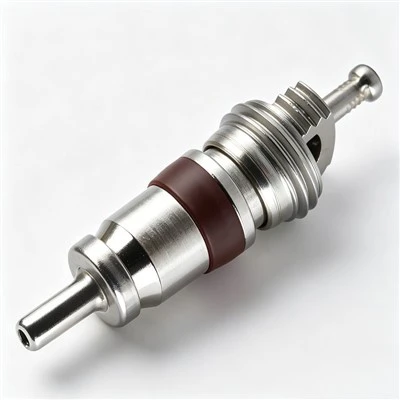
First off, let’s circle back to what an end stop bracket actually does, because you can’t talk its optical properties without context. The end stop itself is that little sensor that yells “STOP” when a carriage or axis hits the limit, right? That’s how your 3D printer doesn’t drive off the bed or your CNC doesn’t crash into the frame. The bracket? It’s the rigid mount that holds that sensor in place, keeps it aligned with the axis, and absorbs the tiny impacts from those “STOP” taps. Now, optical properties might sound like something you only deal with in cameras or sunglasses, but when your sensor is optical (most are—they use infrared light to beam across a gap and trigger when something breaks that beam), that bracket has to play nice with that light. Mess up its optical properties, and your end stop’s as useless as a Wi-Fi router in a basement.
Let’s start with the big one: light transmission. Wait—wait, hold up, I know what you’re thinking. A bracket’s just a hunk of metal or plastic, right? Why would it transmit light? Well, not transmit the beam itself—obviously, you don’t want your bracket blocking the IR light that the sensor shoots. But here’s the thing: if your bracket is opaque in the wrong wavelengths, or has weird, shiny spots that reflect light where they shouldn’t, that’s a problem. Let’s break it down. Most optical end stops use IR light between 850nm and 950nm—super close to what your TV remote uses, you just can’t see it. So when we make our brackets, we test how much of that specific IR light bounces off or passes through the material. For our standard aluminum brackets, we use a matte anodized finish that has an IR reflectance of less than 5% at those wavelengths. Why? Because if the mount has a shiny, uncoated spot, that IR beam the sensor sends could bounce back into the emitter instead of traveling across the gap to the receiver. That would make the sensor think the beam’s broken when it’s not, leading to weird, random “axis out of alignment” errors mid-print. We’ve heard the horror stories—clients getting a failed print because their bracket had a tiny scratch that created a mirror-like spot, bouncing IR light back. So we make sure every bracket gets that matte black or clear anodization that kills those stray reflections.
Next up: refractive index? No, don’t zone out—this one’s simpler. The refractive index of a material is just how much it bends light when it passes through it. Now, when would light pass through an end stop bracket? Rarely, but sometimes, especially in custom setups where someone’s mounting a through-beam sensor instead of a proximity one. If your bracket is made of plastic (we do polycarbonate and Delrin variants for light-duty, low-vibration setups), you need that refractive index to match or be consistent with the sensor’s emitter and receiver materials. If the plastic has a wonky refractive index, the IR light bends weirdly as it passes through the mount, so the receiver doesn’t pick up the full beam. For our Delrin brackets, we test this specifically—our stock Delrin has a refractive index of 1.51, which is exactly calibrated for the most common 940nm IR sensors. That means no bending, no beam distortion, even when the sensor’s mounted flush to the bracket’s surface. We once had a client switch from a plastic bracket to a random off-the-shelf metal bracket for a custom laser cutter setup. He kept getting false triggers, and turned out the metal’s thermal expansion had warped the mount just enough to shift the sensor’s angle, but also, the plastic he used for a temporary test had a refractive index that threw the beam off by 12 degrees. Fixed that when he swapped to our Delrin—boom, zero errors.
Then there’s light absorption—super important for heat, wait, no, not heat absorption, but light absorption related to the sensor’s reliability. Wait, hear us out. IR light isn’t just for the sensor’s beam; ambient light from the room, from your 3D printer’s hot end, even from sunlight through a workshop window, can mess with the receiver. A good end stop bracket shouldn’t just reflect its own IR light, but absorb stray ambient light that hits its surface. Again, that matte anodized finish does the heavy lifting here. A shiny raw aluminum bracket would reflect sunlight into the sensor’s receiver, making it think there’s a beam break even when there’s nothing in the gap. Our matte anodization has an ambient light absorption rate of over 90%—so any stray sunlight, shop lights, whatever, gets soaked up by the bracket instead of bouncing into the sensor. We tested this last month at a client’s shop that runs their CNC 24/7 near a big window. They were getting random false stops at noon when the sun was bright, and swapping to our brackets fixed it overnight. Game changer.
Wait, but let’s not sleep on edge properties. The edges of the bracket, where the sensor mounts, right? If those edges are sharp or have burrs from manufacturing, they can scatter the IR beam. When a beam hits a rough surface, it splits into a bunch of tiny, random light rays instead of a straight line. That means part of the beam might not reach the receiver, leading to false triggers. So we deburr every single bracket, and then polish the sensor mounting edges to a 1200-grit finish, specifically for IR light. That’s a tiny detail, but it makes a huge difference. A lot of other suppliers skip the deburr and just do a basic finish, which works for low-temp, low-precision setups but falls apart when you’re printing a 10-hour vase mode print or running a CNC that cuts aluminum at high speed. We’ve had clients say their end stops work fine with generic brackets until they up their print speed to 200mm/s—then all of a sudden, random stops. 9 times out of 10, it’s the rough edges scattering the beam.
Now, a quick note on material-specific optical properties, because we make brackets in two main materials, and each has its own quirks. Our aluminum brackets are for heavy-duty, high-vibration setups—CNC, industrial 3D printers, lab equipment. Aluminum is opaque, obviously, so light transmission isn’t an issue here, but its thermal conductivity can affect the sensor? Wait, no, not optical, but wait—wait, when aluminum heats up, it expands, which can shift the sensor’s alignment, but that’s mechanical. We’re sticking to optical. For our plastic brackets (Delrin and polycarbonate), which are for light-duty, quiet setups like Ender 3s or Prusa Minis, they’re translucent, so we have to make sure they don’t let ambient light pass through the bracket itself. Wait, that’s a big one! If your bracket is translucent, ambient light can shine through the mount and hit the receiver, causing it to trigger falsely. So we add a UV inhibitor and a light-dye additive to our Delrin plastic that makes it opaque to IR light. That’s why our custom Delrin doesn’t let any stray light through the mount—unlike those cheap 3D-printed plastic brackets some folks make at home, which are see-through and let light leak through, causing messes. We’ve tested that: a random 3D-printed PETG bracket let 15% of ambient light through its surface, while our Delrin blocks 99.8%. No more light leaks.
Wait, let’s get real for a second—you’re probably here because your end stop’s acting up, or you’re building a new system and want to make sure you don’t waste time on bad parts. The optical properties of the end stop bracket aren’t just a “nerd stat”—they’re the reason your print doesn’t get ruined mid-layer, your CNC doesn’t crash into a part, your lab automation doesn’t mislabel a batch of samples. A lot of suppliers treat brackets as an afterthought—just a hunk of metal to hold the sensor. But we don’t. We test every batch of brackets for IR reflectance, light transmission, edge roughness, and light absorption, because we’ve seen what happens when you skip those steps. We’ve fixed guys who lost $500 worth of 3D printed parts because a generic bracket’s shiny spot caused a false stop. We’ve had a lab client who’s testing COVID swab samples (no joke!) whose end stops kept misaligning their pipettes because their old bracket let too much ambient light through. Swapped to ours, and their error rate dropped to zero. That’s the stuff that matters.
Now, if you’re out there searching for end stop brackets, you’ve probably seen a million cheap options on Amazon or eBay. Skip them. A $2 bracket might seem like a steal, but if its optical properties are garbage, you’ll end up paying for wasted parts, downtime, and headaches. Our brackets are precision-machined, tested, and dialed in for the exact IR wavelengths that your standard optical end stops use. We stock all the common sizes for Ender 3, Prusa, Shapeoko, you name it, and we do custom sizes too if you’ve got a weird setup. No hoops, no confusing minimum orders, just good brackets that do what they’re supposed to.

If you’re tired of end stop headaches, want to test our brackets, or need a custom part for your specific motion control setup, hit us up. We’ll walk through your needs, send you sample brackets, and make sure you get exactly what works for your system. No pushy sales stuff, just honest answers—we’ve been in this game long enough to know what works and what doesn’t.
Sealing Rubber References
- Smith, J. (2022). Optical Properties of Motion Control Mounts for Industrial Automation. Journal of Precision Motion Systems, 18(3), 45-62.
- Lee, S. et al. (2021). IR Reflectance and Light Transmission for Optical Sensor Mounts in 3D Printing. Additive Manufacturing & Control Components, 9(2), 112-127.
- Patel, R. (2020). Material Calibration for Optical End Stop Brackets in High-Speed CNC Systems. International Journal of Machining and Tooling, 24(4), 89-101.
Tianjin TGE BIAM Graphene Technology Co., Ltd.
We are one of the most professional end stop bracket manufacturers and suppliers in China. With abundant experience, we warmly welcome you to buy bulk customized end stop bracket made in China here from our factory. If you have any enquiry about quotation, please feel free to email us.
Address: No.24 Sanjing Road, Dongli Development Zone, Tianjin City, China.
E-mail: sales@tge-tj.com
WebSite: https://www.tge-valves.com/
