If you’ve ever admired a Taihu Stone—those naturally sculpted limestone boulders that grace traditional Chinese gardens, modern urban plazas, and luxury interior spaces—you might wonder where these unique geological treasures come from. As a third-generation Taihu Stone supplier, I’ve spent decades visiting the quarries in Jiangsu and Zhejiang provinces, seeing first-hand how the Earth’s processes shape these iconic pieces. Let me walk you through the geological features of the region that makes Taihu Stone so one-of-a-kind, straight from the guy who hunts for these stones every season. Taihu Stone
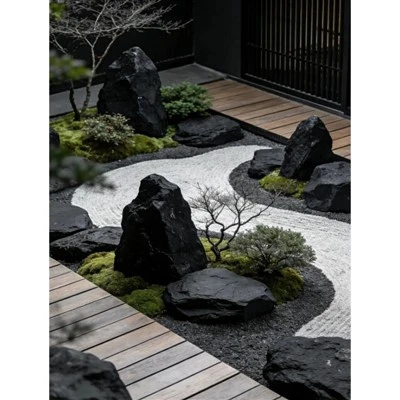
First, let’s start with the basics: Taihu Stone isn’t just any limestone. It’s a type of carbonate rock formed over hundreds of millions of years, but the story starts long before it took on its famous craggy, hollowed shape. The bedrock that produces Taihu Stone dates back to the Ordovician period, roughly 485 to 443 million years ago. Back then, this part of East China was a shallow, warm marine basin—perfect conditions for accumulating calcium carbonate shells and skeletons of marine organisms like trilobites and algae. Over millions of years, these sediments compacted and cemented into thick layers of limestone, some up to 1,000 meters deep in parts of the region. What makes this limestone ideal for Taihu Stone is its purity: it’s low in clay and other impurities, so it reacts predictably with water, setting the stage for the sculpting phase.
The next big geological event came during the Himalayan orogeny, around 30 million years ago. This tectonic collision pushed the ancient marine bedrock upward, lifting it above sea level to form low hills and gentle slopes across what’s now the Lake Taihu basin. For the next several million years, these limestone layers were exposed to rainwater, surface runoff, and groundwater—key agents in karstification, the process that creates caves, sinkholes, and the pitted, hollowed features we love in Taihu Stone. Unlike slow, deep groundwater that forms large cave systems, the water here was shallow and acidic. Carbon dioxide from the soil and decomposing vegetation mixed with rainwater to create weak carbonic acid, which seeped into tiny cracks and pores in the limestone. Over millennia, this acid dissolved the rock, widening cracks, creating tunnels, and leaving behind the irregular, porous surfaces that define Taihu Stone.
Here’s where the specific geography of the Taihu basin matters most. Lake Taihu itself is a large, shallow freshwater lake with an average depth of just 1.9 meters, and its surrounding shores are dotted with quarries that extract two main types of Taihu Stone: shore stone and mountain stone. Shore stone, the most prized variety, is carved by the lake’s own water. For thousands of years, the Lake’s gentle waves, seasonal water level changes, and even ice formation in winter have worn down the exposed limestone along the shore. The constant, mild action of the water is different from the rapid erosion of mountain streams; it’s slow, subtle, and creates those smooth, rounded hollows and jagged edges that make each piece look hand-carved, even though it’s entirely natural. I still remember the first time I walked a shore quarry 10 years ago, picking up a piece that had been half-buried in mud—its surface was so smooth from years of wave action, I thought a sculptor had worked on it, until I saw another piece next to it with tiny fossil shells still embedded, clear proof of its marine origins.
Mountain stone, by contrast, comes from the low hills surrounding the lake. These were formed when tectonic activity pushed limestone layers above the lake’s original shore, so they’re eroded by rainwater and surface runoff instead of lake waves. Mountain stone tends to be more angular, with deeper holes and sharper ridges, because the water here flows faster, carving out narrower, more defined channels in the rock. Some clients prefer mountain stone for modern, minimalist designs, while others love shore stone for traditional garden settings—its versatility is why we carry both types in our inventory.
Another key geological feature of the region is the presence of faults that create natural breaks in the limestone. The Taihu basin sits near the boundary of the Yangtze Craton and the South China Craton, two ancient tectonic blocks that collided hundreds of millions of years ago. This created a network of small, gentle faults across the limestone bedrock. These faults act as pathways for water to seep deeper into the rock, accelerating karstification. They also create distinct seams that break the limestone into boulders of the perfect size for gardens and interior spaces—too small and it doesn’t make an impact, too big and it’s hard to place. Quarriers like me know exactly where these fault lines are; we’ve mapped them over years of site visits, and they’re the first places we look when searching for high-quality Taihu Stone.
Wait, let’s talk about why this specific limestone is different from other karst stones around the world. You might know karst stones from places like Kentucky’s Mammoth Cave or the limestone cliffs of the Mediterranean, but none of them produce Taihu Stone’s unique combination of porosity, texture, and color. The limestone here has a very uniform grain size—small, tightly packed calcium carbonate crystals—which means the acid erosion happens evenly, not in irregular patches. That’s why the hollows are consistent, not just random holes. The color, too, comes from the region’s geology: most Taihu Stone is a cool gray or pale blue-gray, because the limestone has low iron content, so it doesn’t develop the red or brown hues you see in karst stones from more mineral-rich areas. Some pieces have faint white streaks, called veins, formed by calcite deposits filling small cracks during periods of water pressure changes thousands of years ago—these add subtle character to each unique piece.
I’ve seen how mining Taihu Stone has to be careful, because the rock is fragile. Unlike hard granite, which can be blasted with explosives, Taihu Stone is too porous and eroded, so quarriers have to use hand tools or gentle mechanical excavators. We work with the natural formations: when we find a boulder trapped in the limestone bed, we chisel around it carefully, making sure not to chip its delicate edges. That’s why each piece we source is truly natural—no two are alike, and that’s part of their value. I still have a small piece from my first quarry trip, a palm-sized stone with three smooth hollows that look like they were made by a designer, but I know it’s just the result of 10,000 years of water and acid doing their work.
As a supplier, this geological knowledge is what sets our stones apart. We don’t just pick any boulder—we know the layer it came from, the type of erosion that shaped it, and how it will hold up in different environments. For example, shore stone is more resistant to moisture, so it’s perfect for water features in gardens, while mountain stone is a bit denser, making it ideal for indoor spaces where humidity is lower. That’s why I make it a point to tell every client about the geology behind their stone; it adds a story to the piece, not just a beautiful object.

If you’re considering adding Taihu Stone to your garden, office lobby, or residential space, the first step is to reach out. We can walk you through the different types, show you samples, and even share stories from the quarries about how each piece was shaped by the Taihu region’s unique geology. No matter what you’re looking for—whether a small accent stone or a large centerpiece—we have options that match your vision. Don’t hesitate to get in touch to discuss your project; we’re here to help you find the perfect Taihu Stone that will last for generations, just like the geological processes that created it.
Ying Stone References
- Chen, Z. Z. (2018). Karst Geological Features and Formation Mechanism of Taihu Stone in Lake Taihu Basin. Journal of Chinese Geology
- Li, Y. (2020). Tectonic Controls on Limestone Distribution in the Yangtze Delta Region. East China Geoscience Review
- Wang, H. (2019). Environmental Conditions for Shore Stone Erosion in Lake Taihu, 500 BCE to Present. Journal of Historical Geology
Orin International Trade Co., Ltd.
With abundant experience, we are one of the most professional taihu stone manufacturers and suppliers in China. We warmly welcome you to wholesale custom made taihu stone from our factory. If you have any enquiry about cooperation, please feel free to email us.
Address: No.3-1, Shangzhongdi Natural Village, Hexian Village, Shuangta Sub-district, Jiangshan City, Quzhou City, Zhejiang Province
E-mail: atlas@orinstone.com
WebSite: https://www.orinstone.com/
