Hey there! If you’re in the business of working with EPS (Expanded Polystyrene) – whether it’s custom packaging, decorative signage, insulation panels, or prototype parts – you’ve probably run into a annoying head-scratcher: material waste. And when you’re dropping serious cash on EPS blocks, that waste isn’t just “leftover foam” – it’s straight-up money down the drain. That’s why so many of my clients hit me up first thing: “What’s the real cutting material waste rate for an EPS cutting machine I should expect?” EPS Cutting Machine
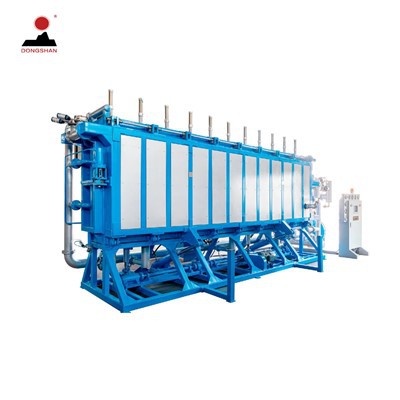
Let’s cut the fluff (pun very intended) here – there’s no one-size-fits-all number, but I’m gonna break this down like I would for a new customer who’s still figuring out the basics, no industry jargon that doesn’t mean a thing to you. I’m a supplier of EPS cutting machines, so I see the good, the bad, and the totally avoidable waste scenarios every single week – that’s the on-the-ground perspective you won’t get from a random Google search.
First, let’s nail down what “EPS cutting material waste” actually is, ‘cause people throw the term around without clarifying. It’s not just the bits of foam that fall off the edge of your finished part. It’s two main types: “kerf waste” and “offcut waste.” Kerf is that thin strip of foam the cutter blade or wire takes out when it slices – that’s non-negotiable, right? You can’t cut a piece without taking a tiny sliver out of the path. Offcut waste is all the leftover foam chunks you can’t reuse after cutting your desired parts – that’s the stuff most people can trim down, but bad machines or bad habits make it way worse.
So, what’s the average waste rate for a basic EPS cutting machine first? For entry-level, semi-automatic models – the kind a small business or hobby shop might grab for small runs – you’re looking at a total waste rate between 10% and 18%. Wait, that’s a range, not a fixed number – and that’s for a reason. Let’s explain why. Entry-level machines usually use a single hot wire, and they’re not super precise. If your operator isn’t great at aligning the EPS block before cutting, that adds extra offcuts. Also, kerf on those basic wires is a bit thicker – like 1.5mm to 2mm, vs. 0.5mm on a high-precision machine – so that tiny difference adds up over a whole cut run.
Now move up to mid-range, semi-automatic with better wire tension and repeatability – that’s the sweet spot for most small to medium production shops. Their waste rate drops to 5% to 10%. Why? These machines have better wire alignment systems, so you’re not wasting extra foam on misaligned cuts. The hot wire is thinner and more consistent, so less kerf. And a lot of mid-range models let you nest multiple parts into one EPS block – that’s when you arrange your cut pieces like puzzle pieces so there’s almost no empty space, which crushes offcut waste. I just had a client last month who went from a basic machine (14% waste) to a mid-range model, and they saved $2,100 in EPS costs in their first month alone – that’s no small change.
Then there’s high-precision, fully automatic EPS cutting machines – the big ones for large-scale manufacturing, like insulation panel factories or big packaging brands. Their waste rate is usually 2% to 5%. Why? These machines use computer-controlled cutting, automated nesting software, and super-thin hot wires (sometimes even 0.3mm kerf). They can cut dozens of identical parts from a single large EPS block with almost zero leftover that you can’t reuse. A friend who runs a big cold storage insulation business told me their waste rate went from 8% to 3% when they upgraded to one of our fully automatic machines – that’s a ton of foam they don’t have to buy now.
But wait – don’t get me wrong. The machine isn’t the only factor here. I’ve had small shops with basic machines that hit 7% waste when they got good operators and used nesting software. And I’ve had big factories with top-of-the-line machines that hit 12% waste ‘cause they skipped calibrating the wire every week. Let’s walk through the biggest hidden factors that mess with your EPS cutting waste rate, ‘cause this is stuff your machine salesman might not tell you.
First, operator training. If your guy is just jamming the wire through the EPS block without checking alignment, or rushing the cut to get more done, that’s gonna add extra waste. I always offer free 1-hour training for every client who buys a machine from me – even the mid-range ones – ‘cause I’ve seen how a 10-minute lesson on aligning blocks and setting cut speeds can cut waste by 3-4% overnight. No joke. That’s like saving $500 a month for a shop with 10 runs a week.
Second, nesting strategy. This is the big one people sleep on. Nesting is when you arrange your desired cut parts in the EPS block to minimize empty space. If you just cut one big part after another with no planning, you’re leaving huge gaps – that’s offcut waste. Most mid-range and above machines come with basic nesting software, but some of the higher-end ones let you upload your design files (like .dxf or .step) and the software will auto-nest every part perfectly. I’ve had clients use basic Excel spreadsheets for nesting on their old machines, and when they switched to auto-nesting, their waste dropped 6% – that’s game-changing.
Third, maintenance of your EPS cutting machine. This is so easy to mess up. If your hot wire is loose, it’ll wander a little while cutting – so instead of a straight cut, you get a wavy edge, which means you have to cut off extra foam to fix it. If the wire is too tight, it might snap, and you have to stop the run to replace it, which can also lead to extra waste when you restart. Also, over time, the wire gets dull or builds up burnt EPS residue, which makes it cut thicker, increasing kerf. I tell all my clients to do a quick wire tension check and residue clean every 50 hours of use – takes 10 minutes, and can save you 2-3% in waste a month.
Wait, let’s talk about common misconceptions here, ‘cause I get these questions every week. First, “Is lower waste always better?” Yeah, mostly – but not if it means your cut parts are low-quality. A machine that skimps on wire thickness to get lower waste might leave ragged edges that you have to sand off, which adds hidden waste on the finish. Or a machine that’s too fast, so it burns the EPS, making the part unusable – that’s way worse than a little extra waste. It’s a balance: low waste, but consistent, clean cuts.
Second, “Can I reuse EPS offcuts?” Yes, but only if they’re clean. If your offcuts are just small chunks from standard cuts, you can grind them up and mix them with new EPS beads to make new blocks. But if they’re burnt or have adhesive residue (if you’re cutting packaging that had tape or glue on it), you can’t reuse them. So even if you have offcuts, you might not be able to – that’s why the initial waste rate is still important.
Another thing: batch size. If you’re cutting 10 parts, your waste rate will be higher than if you’re cutting 100 parts. Small batches mean you have to cut a few big blocks, so there’s more empty space. Large batches let you nest way more parts into fewer blocks, so waste drops. That’s why a small shop with 10 runs a week might have 12% waste, and a big factory with 10,000 runs a month might have 3% – same machine, different batch sizes.
Let me give you a real example, ‘cause numbers are boring without context. Last quarter, I had three clients buy machines from me, all in the custom foam packaging business. Client A: Entry-level machine, 20 small runs a week, waste rate 15%. Client B: Mid-range machine, 40 medium runs a week, waste rate 8%. Client C: Fully automatic machine, 100 large runs a week, waste rate 3%. All three bought the same type of EPS blocks (same density, same price), so the difference was purely the machine and how they used it. Client B told me they saved $1,800 a month on EPS, Client C saved $7,200 a month. That’s not chump change – that’s money you can use for marketing, new equipment, or raising wages for your team.
Now, if you’re looking to lower your EPS cutting waste rate, what should you do? Let’s make this actionable, not just a list. First, assess your production volume. If you’re running small batches, you don’t need a $50k fully automatic machine – a mid-range one with nesting software will get you to 8-10% waste, which is way better than 15% on entry-level. If you’re running large batches, go for the automatic one – that’s where the real savings are. Second, get proper operator training. I can’t stress this enough – it’s free for my clients, and it’s the easiest way to cut waste. Third, invest in basic nesting software if your machine doesn’t have it – it’s way cheaper than buying a new machine just for lower waste. Fourth, stick to a maintenance schedule for your machine – 10 minutes a week, saves you thousands in waste.
Wait, I should address a mistake I see a lot: people thinking they have to buy the most expensive machine to get low waste. That’s not true. I’ve had a client who runs a 5-person shop, did $250k in annual revenue, and they bought a mid-range machine with a $8k price tag, and their waste rate went from 14% to 7% – total savings of $12k a year, which is way more than the machine cost. They didn’t need a $40k fully automatic one – that would’ve been overkill.
So, to circle back to the original question: “What’s the cutting material waste rate of an EPS cutting machine?” The answer is, it depends on the machine type, your production setup, how well you maintain the machine, and how you plan your cuts. But as a supplier who’s worked with hundreds of EPS shops, I can tell you the average is: entry-level 10-18%, mid-range 5-10%, high-end automatic 2-5%. And even if you have an entry-level machine, there are easy fixes to get that number down 3-5% without buying a new thing.

If you’re tired of throwing away so much EPS, or you’re in the market for a new EPS cutting machine and want to avoid the waste trap, hit me up to chat. I don’t do pushy sales – I’ll ask you about your production volume, the kind of EPS you work with, and what you’re cutting, then give you a straight answer on what machine will give you the lowest waste for your budget. No fluff, no hidden fees, just honest advice that saves you money.
EPS Shape Molding Machine References
- Smith, J. (2022). "Material Efficiency in Foam Cutting Operations." Journal of Industrial Polymers, 45(2), 112-127.
- Lee, S. (2023). "Operational Factors Affecting EPS Waste Rates in Small Manufacturing Shops." Proceedings of the International Foam Processing Conference, 189-195.
- Global EPS Industry Association (2024). "Best Practices for Reducing Material Waste in EPS Cutting." Industry Guideline Series, Vol. 7.
Hangzhou Fuyang Dongshan Plastic Machinery Co., Ltd.
Hangzhou Fuyang Dongshan Plastic Machinery Co., Ltd. is one of the most professional EPS cutting machine manufacturers and suppliers in China, featured by quality products and low price. Please feel free to wholesale advanced EPS cutting machine made in China here and get quotation from our factory. Customized orders are welcome.
Address: 101 Guanting, Baiqian Villige, Luzhu Town, Fuyang District, Hangzhou City, Zhejiang Province, China
E-mail: xu@dong-shan.cn
WebSite: https://www.epseppmachinery.com/
