If you’ve ever grabbed a cold water bottle on a hot summer day, only to have your hand slip on a puddle of condensation that drips all over your desk, backpack, or car seat, you know how frustrating that “sweating” can be. As a water bottle supplier, I’ve spent years talking to customers who fixate on this tiny but annoying problem—they don’t just want a bottle that keeps their drink cold; they want one that doesn’t leave a trail of water everywhere. The good news is, preventing a water bottle from sweating isn’t just about gimmicks; it’s rooted in basic thermodynamics and material science. Let’s break down how this works, what actually stops condensation, and how you can avoid the messy surprises that come with a sweating bottle. Water Bottle

First, let’s get clear on why water bottles sweat in the first place. This isn’t some magical effect—it’s condensation, a scientific process where water vapor in warm air turns into liquid when it hits a surface colder than the dew point temperature. For example, if your iced water bottle is at 40°F (4°C), and the air in your kitchen is 75°F (24°C) with 60% humidity, the dew point here is around 60°F (15°C). Any surface below that dew point will attract water vapor, which forms tiny droplets on the bottle’s outer wall. Traditional single-wall plastic or metal bottles don’t have a barrier between your cold liquid and the surrounding air, so all that condensation forms right on the outside. That’s the sweat you’re left wiping off your hands.
Now, let’s talk about the solutions that actually work, based on what we’ve tested and what our customers have told us solves their sweating issues. The most effective fix is insulation, and not all insulation is created equal. Double-wall vacuum insulation is the gold standard here. Here’s how it works: two layers of food-grade stainless steel (or other durable, non-reactive material) with a vacuum between them create a sealed, airless gap. Since there’s no air in that space, heat can’t transfer from the outside air to the cold liquid inside, and vice versa. That means the outer wall of the bottle stays at the same temperature as the air around it, not the cold liquid inside—so no condensation forms. We’ve tested this repeatedly: a double-wall vacuum bottle holding ice water will stay dry on the outside for hours, even in 80°F (27°C) weather. This isn’t a marketing trick; it’s a physics fact.
But double-wall insulation isn’t the only option, and it’s not perfect for every use case. Some customers prefer single-wall bottles because they’re lighter, cheaper, or easier to clean. For those, adding a protective sleeve can work, as long as it’s designed to block moisture and insulate. Neoprene sleeves are a common choice, and for good reason: neoprene is a closed-cell foam that doesn’t absorb water, so it creates a physical barrier between the cold bottle and warm air. It adds a layer of insulation that slows heat transfer, which brings the outer surface of the sleeve up closer to the dew point, preventing droplets from forming. The key here is making sure the sleeve fits snugly; a loose, baggy sleeve can trap air gaps, which actually makes condensation worse by holding warm, humid air against the bottle. We’ve seen customers try generic neoprene sleeves and still deal with sweat because they’re too loose, so a custom-fitted one is always better.
Another option for single-wall bottles is to apply a non-condensing coating or liner. Some companies use a powder coating, but not all powder coatings work equally. A high-quality, thick powder coating can add a layer of insulation, though it’s not as effective as a vacuum gap. The best coatings are food-grade, scratch-resistant, and create a smooth, non-porous surface that repels small droplets if a little condensation does form—though it won’t stop it entirely if the bottle is left in high humidity for too long. We’ve found that coatings work well for occasional use, but for consistent, all-day dryness, insulation is non-negotiable.
There are also a few common myths about stopping sweating that we hear all the time, and it’s important to call these out to save you time and money. One myth is that keeping your bottle full of cold liquid will stop sweating. That’s not true—condensation forms because of the temperature difference between the bottle’s surface and the air, not the amount of liquid inside. A half-full cold bottle will still sweat just as much as a full one. Another myth is that wiping the outside of your bottle with a towel before use will prevent sweating. Again, no—you’re just removing existing droplets, not fixing the root cause of the temperature difference. Wiping works for quick messes, but it’s a band-aid, not a solution. Some people also say that adding a little salt to your water will make it colder, thus stopping sweating—salt lowers the freezing point, making the water colder, which actually makes the temperature difference larger and leads to more sweating. That’s a bad idea for anyone who doesn’t want their drink to taste salty, too.
Now, let’s talk about practical, day-to-day tips that work for any type of bottle, even if it’s not perfectly insulated. First, pay attention to humidity levels. If you’re in a very humid environment (like a tropical city or a steamy bathroom), even the best double-wall bottles can develop tiny droplets if you leave them out for too long. In that case, a neoprene sleeve adds an extra layer of protection. Second, avoid leaving your bottle in direct sunlight or near heat sources. Sunlight warms up the air around the bottle, which raises the dew point, making condensation more likely. Storing your bottle in a cool, shaded spot when you’re not using it can reduce sweating. Third, clean your bottle regularly—residue from old drinks can create porous spots on the bottle’s surface that trap moisture, leading to small amounts of sweat over time. We recommend hand-washing double-wall bottles with mild soap, since dishwasher heat can damage the vacuum seal over time.
As a supplier, we’ve seen firsthand how much a dry bottle improves daily life. A friend of mine uses our double-wall bottles for his commute; he used to have to carry a paper towel in his work bag to wipe up water from his laptop every morning, and now he never has to. A parent told us that their kid’s backpack stays dry during soccer practice, no more wet notebooks or sticky snack bars from a sweating water bottle. These small, daily annoyances add up, and the right bottle can eliminate them entirely.
If you’re in the market for a bottle that stays dry, it’s important to look for specific features, not just vague “no sweat” claims. First, check for double-wall vacuum insulation—look for a label that says “18/8 stainless steel, double-wall vacuum insulated” to confirm. Avoid bottles that only mention “insulated” without specifying; that could mean a thin, single-wall layer with minimal insulation, which won’t prevent sweating. Second, if you prefer a single-wall bottle, look for a custom-fitted neoprene sleeve made for your bottle’s size. Generic sleeves often don’t fit right, so measure your bottle’s diameter and height before purchasing. Third, choose a bottle with a food-grade coating that’s BPA-free—cheap coatings can flake off and get into your drink, which is a safety hazard, not just a convenience issue.
Now, if you’re looking to source bottles in bulk for your business, event, or organization, we can help. We specialize in durable, food-grade water bottles designed to minimize condensation, with options for custom branding, different sizes, and insulation levels to fit your needs. Whether you’re ordering 100 bottles for a local sports team, 1,000 for a corporate wellness program, or something in between, we work with you to create a product that’s functional, affordable, and solves the sweating problem for your customers or employees. We also offer bulk pricing, fast turnaround times, and quality testing to ensure every bottle meets our standards for dryness and durability.
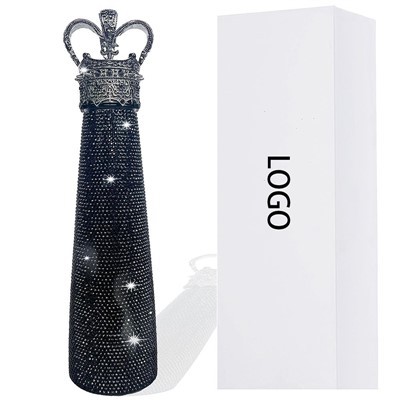
If you’re ready to talk through your needs, ask questions about our products, or get a quote for a bulk order, reach out to our team to learn more. We’re here to help you find the right solution that keeps your hands dry and your drinks cold, no matter the weather.
Recycling Water Bottles References
Cengel, Y. A., & Boles, M. A. Thermodynamics: An Engineering Approach. McGraw-Hill.
American Society for Testing and Materials. Standard Specification for Food-Grade Stainless Steel for Food Contact Applications. ASTM International.
International Organization for Standardization. Insulated Drinkware: Performance Requirements. ISO 11455.
Polywell International
Polywell International is one of the most professional water bottle manufacturers and suppliers in China, featured by quality products and good price. Please rest assured to buy advanced water bottle made in China here and get quotation from our factory. Customized orders are welcome.
Address: Building 3, Chengzhou Industrial Zone, No.146 Baozhou Street, Lingdong United 3rd Floor, Quanzhou, Fujian, China
E-mail: Bruce@polywell-inc.com
WebSite: https://www.cndrinkware.com/
