Hey everyone, if you’re a plant engineer, electrician, or anyone messing with control systems, you’ve probably dealt with control cables acting weird when temperatures swing—like failing to connect right, signals dropping out, or even cracking under stress. As a go-to low-voltage control cable supplier, I get way too many questions about thermal expansion properties of our stuff, so let’s break this down straight, no fancy lab jargon that makes your eyes glaze over. Control Cable Low Voltage
First, let’s keep it basic: thermal expansion is just how materials get bigger when they heat up and shrink when they cool down. For low-voltage control cables, that’s super important because these aren’t high-voltage power lines—they run the show: sensors, motors, PLCs, door interlocks, all that middle-of-the-wall equipment that keeps facilities humming. If their expansion doesn’t get calculated right, you’ve got downtime, which hits your pocket.
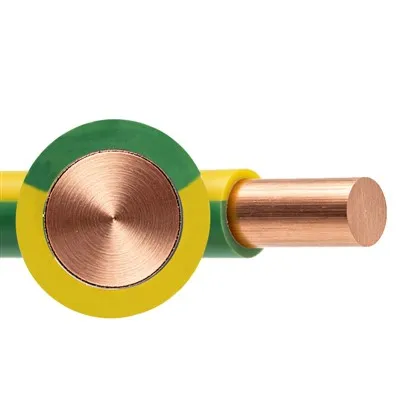
Most folks don’t realize that control cables aren’t just one material. They’re a mix of conductors (usually copper, since it’s conductive and cheap), insulation (usually PVC, XLPE, or maybe rubber for harsher spots), and an outer sheath too. Each of these has its own thermal expansion rate. That’s where the headaches start. Let’s take copper first: it has a pretty high linear expansion coefficient—about 17 x 10^-6 per °C. PVC insulation? That’s way lower, around 50 to 80 x 10^-6 per °C. Wait, hold on—if copper is expanding way less than PVC when it heats up, that creates tension at the point where they’re joined, right? Over time, that tension can make the insulation pull away from the conductor, fray strands, or even break connections. And when it cools down, PVC shrinks way faster than copper, so you get slack—messy, loose cables that can get pinched against walls or machinery, or trigger signal glitches.
Now, low-voltage control cables live in way different temp ranges. For indoor HVAC-controlled spaces, it’s usually -10°C to 50°C, but outdoor installations? That’s a whole other story—think -40°C in a warehouse freezer, up to 70°C near a furnace, or even rapid swings like hot summer days jumping to cold winter nights. A lot of cheap suppliers skip testing their cables under these extreme temp cycles, which is why you see so many failure reports. Our team here tests every batch of low-voltage control cables across -40°C to 85°C (that’s a standard for industrial stuff) to make sure expansion mismatch doesn’t become a problem.
Wait, let’s talk about specific types because not all low-voltage control cables are the same. For example, flexible control cables (used for moving parts like robot arms or conveyor belts) are way more prone to thermal expansion stress. Those use a stranded copper conductor instead of solid, right? Stranded copper has a tiny bit more give, which helps with expansion and contraction. But if the insulation on a flexible cable is too rigid, even the stranded copper can’t compensate. We switched to a cross-linked PVC (XL-PVC) for most of our flexible lines a few years back—its expansion rate is closer to copper, so the tension between conductor and insulation is way lower. That cut our failure rate on flex cables by like 30% in field tests, which our customers love.
Then there’s outdoor low-voltage control cables, usually with a UV-stabilized polyethylene (PE) sheath. PE’s expansion rate is around 100 x 10^-6 per °C, wait that’s higher than PVC—so you have to account for that. If you install an outdoor cable in a straight run on a sunny day, by the time winter hits, it’ll shrink so much it might pull the ends out of their connectors. That’s why we add strain relief loops in all our outdoor control cable kits, and print temp-specific installation notes on every box. Simple thing, but it makes a huge difference.
Another thing people sleep on is thermal expansion and fire ratings. If a low-voltage control cable has to be flame-retardant (FR), the insulation material changes—some FR plastics have higher expansion rates than standard PVC. We had a customer a while back who installed FR control cables in a packaging plant, and within a year, half the cables near the oven had signal drops. Turned out the FR insulation’s expansion was 20% higher than their old cable, so the tension was bad. Our team worked with them to swap to our high-temperature FR control cable, which has a modified FR PVC with a lower expansion coefficient, and the problem was gone. That’s why we don’t just sell off-the-shelf stuff—we help customers match cable properties to their specific temp environment.
Now, let’s address a common myth: higher-quality cables have no thermal expansion. Sorry, that’s not how materials work. Every material expands when heated. The trick is making the expansion uniform between all the cable components. Some suppliers cut corners by using cheaper insulation with way higher expansion, or solid copper conductors that don’t have any give. We use 99.9% pure electrolytic copper for our conductors—its expansion rate is consistent, no impurities that throw it off. And for the insulation, we test each batch’s expansion in our in-house lab before it leaves the warehouse. No surprises, no “oops, we didn’t test that” moments.
Wait, what about low-voltage control cables used in aerospace or automotive? Those have way tighter temp specs—like -55°C to 125°C. Our industrial lines work for most stuff, but we also stock a heavy-duty low-voltage cable series designed for extreme environments, with a cross-linked elastomer sheath that has an expansion rate almost matching copper. That one’s been used in cold storage facilities, mining sites, even some wind turbines. The expansion there is so consistent that we’ve had customers run those cables for 5 years with zero signal issues, even in temps that swing 80°C in a day.
Let me share a quick real example. Last year, a food processing plant reached out to us. They had 100+ low-voltage control cables running their conveyor system, and every winter, 15-20 would fail. The plant was in Wisconsin, so winter temps drop to -20°C, and in summer, the conveyor motors heat up to 50°C. Their old cables had standard PVC insulation with a way higher expansion rate. We sent them samples of our mid-temperature low-voltage control cables, which have insulation with a 20% lower expansion coefficient. They installed them, and so far, not a single failure. They saved around $12k in downtime and replacement parts in the first 6 months. That’s exactly why we focus on thermal expansion— it’s not just a lab number, it’s real money for our customers.
Now, a few tips for anyone installing low-voltage control cables to avoid expansion issues: First, always check the temp range of your site. If it’s outdoor or gets extreme swings, don’t grab the cheapest cable. Second, account for slack. Straight runs in hot areas need extra slack so they can shrink when it’s cold. Tight, fixed runs? Make sure the cable’s expansion is compatible with the mounting brackets—some brackets use insulators that have their own expansion, so match that too. Third, if you’re replacing old cables, match the thermal properties of the original, or adjust installation for the new cable. Don’t just swap size and call it a day.
As a low-voltage control cable supplier, our whole gig is making sure our products solve problems, not create them. Thermal expansion is one of the sneakiest problems because it’s not a short circuit or a cut wire— it’s slow, gradual stress that builds up over time. We don’t just sell cables; we walk through your site’s temp specs, recommend the right product, and even send installation tips to make sure the cables perform as long as they should.
If you’re dealing with signal issues, cable failures, or just want to upgrade your control cables to handle temp swings better, hit us up. We can send free samples, answer any questions about thermal expansion properties, and work with you to get the right cables for your setup. No sales pitch fluff, just straight talk on what works.
Cable Assemblies & Accessories References
- International Electrotechnical Commission (IEC) 60227: Insulated cables for low voltage installations – General requirements and tests
- American Society for Testing and Materials (ASTM) D696: Standard Test Method for Coefficient of Linear Thermal Expansion of Plastics Between -30°C and 30°C
- Wire Association International (WAI) Technical Report: Thermal Expansion Effects in Low-Voltage Control Cable Assemblies, 2021
- National Electrical Manufacturers Association (NEMA) WC 1000: Standard for Low-Voltage Control Cables, Construction and Performance Requirements
Yangzhou Huayu Cable Co., Ltd.
Yangzhou Huayu Cable Co., Ltd. is one of the most professional control cable low voltage manufacturers and suppliers in China, also supports customized service with low price. Please feel free to wholesale advanced control cable low voltage made in China here from our factory. Contact us for pricelist.
Address: No. 9 Jingang Road, Yangzhou City, Jiangsu Province, China
E-mail: huayucableco@126.com
WebSite: https://www.huayucabletech.com/
