Hey everyone, if you’ve ever wondered how much power a typical gas generator can crank out—whether you’re backup power for a home, a worksite that’s off-grid, or a small business prepping for outages—you’re not alone. As a gas generator supplier, I get this question literally every single day from contractors, property managers, even random folks looking to keep their RV running on a cross-country trip. Let’s break this down straight, no confusing jargon, just the real numbers and what actually matters when picking one out. Gas Generator

First, let’s get the basics out of the way: a gas generator runs on gasoline, obviously, and we’re not talking about industrial-sized units that power entire factories here—we’re talking the ones most people can actually walk into a store or order online without dropping a small fortune. These fall into three main categories, and their power outputs are way bigger than most people assume when they’re just grabbing a unit for a weekend camping trip. Let’s start with the smallest ones, like the 1,000 to 3,000-watt models. Those are the tiny, portable ones—think the kind you toss in the back of a pickup for tailgates, or power a few fridge lights, a microwave, and a laptop during a short outage. Wait, hold on, when I say watts, that’s two numbers you need to pay attention to: starting watts and running watts. Most folks mix these up, and that’s a huge mistake. Starting watts are the extra power a generator needs for a second or two to fire up a big appliance like an AC or a fridge compressor, and running watts are the steady power it can keep going for hours without messing up. For that tiny 2,000-watt portable, for example, it might have 2,000 running watts and 2,400 starting watts. That’s enough to power a fridge, a TV, a couple lights, and a space heater—perfect for a small apartment outage, but don’t try to run your whole house on it, that’ll trip it faster than a bad Wi-Fi connection.
Next up, the mid-sized units, which are the sweet spot for most people and businesses that need more oomph. These are usually 3,500 to 8,000 running watts, with starting watts hitting up to 9,500 for some models. Let’s put that into real use: a 7,000-watt gas generator, for example, can run a central AC unit (which needs around 3,500 starting watts alone), your fridge, freezer, microwave, washing machine, and a handful of lights all at the same time. That’s what most homeowners go for if they live in an area with frequent power outages, or small construction crews need to run power tools on a job site that’s not hooked up to the grid yet. I see so many people making the mistake of buying too small a unit here—they look at running watts and forget the starting watts, so their generator dies the second they fire up their AC. Trust me, I’ve seen it: a guy bought a 5,000-watt unit last summer, tried to run his 3-ton central AC, and the starting watts for that AC are 5,200, so the generator just groaned and shut off. We swapped him up to a 7,000-watt model, and he hasn’t had a problem since.
Now, the big ones—the heavy-duty portable gas generators, the kind that aren’t meant for tailgates, but for worksites, small businesses, or even whole-house backup for larger homes. These range from 8,000 to 15,000 running watts, with starting watts up to 18,000 on some units. That’s insane, right? For perspective, a 12,000-watt gas generator can power a whole 2,000 square foot house—everything from the central AC and oven to the dryer, multiple TVs, and space heaters all at once. We’ve had a few restaurant owners buy these for backup if their power goes out during dinner rush, which makes total sense—you don’t lose your walk-in cooler or your fryer during an outage. A lot of people ask why not just go with a bigger unit, but here’s the catch: bigger generators use way more gas, are heavier to move, and cost way more upfront. A 15,000-watt model will guzzle about 3 gallons of gas an hour at half load, while a 5,000-watt only uses around 1 gallon an hour. So if you only need power for a few small devices, dropping $2,000 on a big unit is just throwing money away.
Wait, I should also mention what actually impacts a generator’s power output, because it’s not just the sticker number. A lot of cheap no-name generators you might see on Amazon lie about their wattage—they’ll say 10,000 watts, but that’s peak, and actual running power is way lower. That’s why as a supplier, I only carry units from brands that publish real, tested numbers, not inflated marketing fluff. Another thing: altitude. If you’re running a generator above 5,000 feet, the thinner air means the engine doesn’t get as much oxygen, so it loses about 3% of power for every 1,000 feet you go up. So if you’re in Denver, that 7,000-watt unit is actually only putting out around 5,500 watts. And temperature matters too—extreme cold or extreme heat can affect performance. In the dead of winter, a generator will lose a little power because the battery is less efficient, and in 100-degree heat, the engine has to work harder to cool itself. I always tell customers to add a 10-15% buffer to their total power needs when calculating, just to cover those variables.
Also, what about dual-fuel vs regular gas generators? I get that question a lot. Regular gas generators run only on gasoline, but dual-fuel ones can run on propane or natural gas too. Their power output is pretty similar, though—most dual-fuel gas models have the same wattage ratings as their gas-only counterparts, though some lose a tiny bit of power when running on propane. The big plus for dual-fuel is that propane lasts longer, doesn’t go bad sitting in the tank for months (gas can go bad in 30 days if you don’t add stabilizer), and you can use your home’s natural gas line for extended runs without refueling. But if you just need backup for a few hours during a storm, a regular gas generator is cheaper and totally fine.
Let’s do a quick practical example so you can figure out what you actually need. Let’s say you’re a homeowner with a 1,500 square foot house. Your big appliances are: central AC (3,500 starting, 1,500 running), fridge (1,000 starting, 800 running), freezer (1,000 starting, 800 running), oven (2,000 running), washing machine (1,200 running), and a few lights and devices (total 1,000 running). Add that up: starting watts would be 3,500 + 1,000 + 1,000 = 5,500. Running watts total is 1,500 + 800 + 800 + 2,000 + 1,200 + 1,000 = 7,300. So you’d need a generator with at least 7,500 running watts and 9,000 starting watts. That’s a mid-to-heavy duty model, which is exactly what we sell most of for residential backup. I see people underestimate that oven—they think it’s small, but electric ovens pull a ton of power, so don’t skip that when adding up your needs.
Another example: a small construction crew working on a job site that doesn’t have power. They need to run a circular saw (1,800 running, 3,000 starting), a drill (500 running), a table saw (2,000 running, 3,500 starting), and a few lights (500 total running). Starting watts here are 3,000 + 3,500 = 6,500, running watts are 1,800 + 500 + 2,000 + 500 = 4,800. So a 5,500 running watt generator would work perfectly here, which is a solid mid-sized unit that’s easy to move around a job site.
Now, let’s talk about common myths I hear all the time. First, “bigger is always better.” No, not if you only need power for a laptop and a fridge. That 15,000-watt unit is 300 pounds, you can’t lift it alone, it uses way more gas, and costs twice as much as a 7,000-watt model. Second, “all gas generators have the same power.” Nope, cheap off-brand models will have flimsy engines that can’t sustain peak power for more than a few minutes, and they might trip or even damage your appliances. We test every generator we sell to make sure the wattage numbers are accurate, so you don’t have to worry about that. Third, “you can’t run a gas generator inside.” Obviously, that’s a death sentence—carbon monoxide kills, so always run them outside, at least 20 feet from your home or workspace, with the exhaust pointing away from any doors or windows. That’s a safety thing, not a power thing, but it’s worth repeating because I still see people try to run theirs in the garage.
So where does that leave you? If you’re trying to figure out how much power you actually need, it’s all about your specific use case. Are you a homeowner needing whole-house backup? A contractor needing power tools? A camper needing to run a mini-fridge and a AC? Add up all the starting watts of every appliance you want to run at the same time, then add 10-15% for buffer, and that’s your minimum generator power. If you’re confused about how to do that, or you’re not sure which wattage is right for you, don’t guess—reach out. As a gas generator supplier, my job isn’t just to sell you a unit, it’s to make sure you get the right one that works for your needs, no wasted money, no headache. Whether you’re a first-time buyer or you’ve been through a few generators and know exactly what you need, hit us up to chat through your requirements, ask questions, or even compare models. We can walk you through specs, help you calculate your power needs, and make sure you get a generator that’s reliable, fits your budget, and meets your power needs.
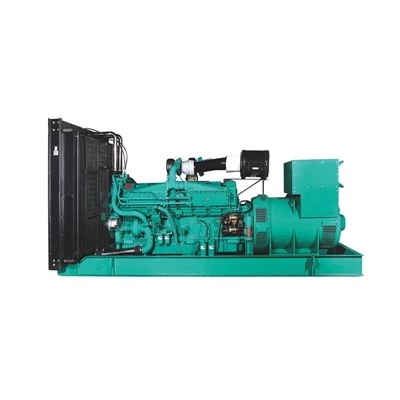
At the end of the day, a gas generator’s power output is straightforward once you stop mixing up starting and running watts, and know what to look for in real, tested numbers. It’s not some complicated rocket science, but it’s important to get it right so you don’t end up with a generator that’s too small to keep your fridge cold during a storm, or too big and wasteful for your weekend camping trip. We’ve got all sizes, from tiny 1,000-watt portable units to heavy-duty 15,000-watt models, so whatever you need, we’ve got you covered. Don’t wait until the next outage to figure this out—get ahead of it, and reach out to us to start planning your purchase today.
Diesel Generator References:
- U.S. Energy Information Administration. (2022). Small Generator Performance and Usage Guidelines.
- Portable Power Equipment Association. (2023). Generator Wattage Specifications and Safety Standards.
- Consumer Reports. (2023). Residential Backup Generator Buying Guide.
- OSHA. (2021). Carbon Monoxide Safety for Portable Generator Users.
- Gas Engine Manufacturers Association. (2022). Altitude and Temperature Effects on Small Engine Power Output.
Weifang Bofa Power Equipment Co., Ltd.
We’re well-known as one of the best gas generator suppliers in China. With a professional production team, we are able to meet the needs of the majority of our customers. Please feel free to buy cheap gas generator for sale here from our factory. For price consultation, contact us.
Address: Lianhuachi Village, Fangcheng Street Office, Fangzi District, Weifang City, Shandong Province.
E-mail: sales@wfbofapower.com
WebSite: https://www.wfbfgenset.com/
