Alright, let’s cut to the chase—if you’re running an annular lime kiln, you’ve probably stared at uneven calcination more times than you care to admit. One side burns too hot, another’s still cranking out underburnt lime, and before you know it, your product quality’s all over the place, fuel bills are sky-high, and downtime’s a pain. I’ve been deep in the annular kiln game for over a decade now (hey, I run a kiln supply team, so I see this every week), and let’s be real—calcination uniformity isn’t magic. It’s about small, intentional tweaks, not some overcomplicated theory. Let’s break this down like we’re chatting over a coffee, no stuffy jargon. Annular lime kiln

First, let’s get one thing straight: annular lime kilns are great for lime production—they have that unique donut shape that’s supposed to even out heat, right? But that “supposed to” is where everyone trips up. The gap between the inner and outer walls, the way you feed lime stone, how air moves through that doughnut—all of these can throw uniformity way off. I’ve seen plants where 20% of their lime is underburnt because they fed rocks too big on one side, and another where overheating melted the lining because airflow got stuck in a dead spot. Let’s start with the biggest culprit most people overlook: feed consistency.
You’d think feeding limestone is easy, but no—if your feed is a mix of 2-inch chunks and 6-inch lumps, you’re already setting yourself up for failure. Bigger lumps take way longer to calcine (they need more heat to cook all the CO2 out), and they block airflow around smaller rocks. I once worked with a plant that thought they had a kiln airflow issue, turned out their crusher was broken, so they were feeding 50% oversized limestone. They fixed the crusher, and uniformity jumped 30% overnight. Here’s the play: size-grade your limestone properly. Split it into two fractions—say 2-4 inches and 4-6 inches—so every rock needs roughly the same calcination time. Also, don’t feed it all at once. Use a variable-speed feed chute that moves slowly around the annular chamber, not dumping a pile on one side. Even distribution here is non-negotiable. If you pile all the small rocks on the outer wall, the inner wall gets all the big ones—boom, uneven calcination before the heat even turns on.
Next up, airflow. Annular kilns rely on air flowing evenly from the bottom (or top, depending on your design) through the stone bed, right? But here’s the thing: the inner and outer walls of the annulus have different pressures, and if your airflow ports aren’t aligned, air will take the path of least resistance. Like, if an air port on the outer wall is blocked with dust, all the air will rush through the inner side, leaving the outer side starved. How do you fix this? First, regular port checks. I tell every plant I work with to do a quick visual check every shift—no climbing into the kiln, just look through the sight ports to make sure the air nozzles aren’t clogged with ash or unburnt lime. Then, calibrate the air dampers for inner and outer walls separately. Most annular kilns come with individual dampers for each side, but almost no one adjusts them. Last month, a client was complaining about outer wall lime being underburnt—we cranked the outer damper 15% and lowered the inner by the same, and boom, uniformity fixed. Pro tip: use a thermal camera (the cheap handheld ones work now, no need for a fancy industrial one) to scan the outer and inner walls mid-run. If you see a hot spot on the outer wall, that side’s getting too much air (wait, no—hot spot means too much heat, which often comes from too much air, or blocked exhaust). Wait, let me correct that: if a section of the kiln wall is hotter, that area’s burning hotter, which means either more fuel there, or airflow is pushing heat into that spot. The thermal scan will tell you exactly where the uneven heat is, so you can tweak dampers. No guesswork.
Fuel distribution is the third big one, and this is where a lot of generic kiln tips fall short. Annular kilns use either gas, oil, or solid fuel like coal, right? If you’re firing from the bottom (like a counter-flow kiln), the fuel injectors are spaced along the inner and outer walls. But if those injectors are misaligned, or the fuel pressure is uneven from side to side, you’ll get a hot zone on the left and cold on the right. For gas-fired annular kilns, make sure the burner tips are all the same size—no worn-down tips that spray less fuel. For solid fuel, don’t just dump coal all in one place; use a spreader that distributes it evenly across the annulus. I had a client using coal that was being fed from a single hopper on the outer wall—half the annulus got no coal, so that lime was underburnt. We added a second hopper on the inner wall, and adjusted the spreader to overlap, and that fixed 90% of their uniformity issues in a week. Also, monitor fuel pressure at each injector. If one side is at 10 PSI and the other at 15, the higher pressure side is dumping more fuel—simple. Most DCS systems (those digital control boards) track this, so just set alarms for pressure differences across inner and outer injectors.
Wait, what about bed depth? Oh my god, everyone forgets bed depth. The annulus is a fixed width, right? So if you have uneven bed depth (like more stone on the outer wall than inner), the air has to push through a thicker bed on the outer side, which slows airflow down. That means the inner side gets more air, more heat, and burns too fast—underburnt on the outer, overburnt on the inner. How do you fix bed depth? Use a rake system (a lot of modern annular kilns have this) that levels the bed as it rotates. If yours doesn’t, you can manually adjust the feed rate to match the discharge rate. Wait, no—when lime is calcined, it shrinks, right? So the bed depth slowly decreases as it moves from feed end to discharge end. The key is to keep the bed height consistent along the entire length of the annulus. I suggest placing level sensors at 3-4 points along the kiln—feed end, middle, discharge end, inner and outer. If the level on the outer is dropping faster, slow the feed on that side, or speed up the discharge. Small adjustments, but they add up to way more uniformity.
Now, let’s talk about maintenance—this isn’t a one-time fix. Annular kilns have rotating parts, walls that wear down, ports that clog. If you skip monthly maintenance, all those tweaks you did will go to waste. For example, if the inner wall lining is eroded, that area will hold less heat, so lime there will be underburnt. A quick lining check every 6 months, patching small spots before they get big, will keep heat consistent. Also, don’t ignore the discharge area. The annular kiln’s discharge grate—if it’s clogged with burnt lime, air can’t escape, so backpressure builds up, and airflow gets messed up. I had a plant that waited 6 months to clean the discharge grate, and by then, backpressure was so high, their fuel consumption went up 20% and uniformity was terrible. A weekly 30-minute clean of the discharge grate? Nothing, and it pays off big time.
Wait, let’s address a common myth: “I need to crank the heat to get uniformity.” No way. Uniformity is about balancing heat, air, feed—not just turning up the gas. I once had a client who turned the kiln temp from 1000°C to 1100°C to fix uneven lime, but it just made the hot side overburnt and the cold side still underburnt, plus they had to replace the lining 6 months early. Instead, balance those three factors first, then adjust temp. The target is 900-1000°C for lime calcination, right? Keep it in that sweet spot, don’t overdo it.
And for you guys who use digital control systems (DCS)—don’t just set it and forget it. A lot of DCS programs have default settings that are generic, not tailored to your specific kiln. For example, the default might be “equal airflow inner and outer,” but your kiln’s wear pattern might mean the outer wall needs 5% more airflow. Tweak the control loop to include inner/outer airflow and temp differentials. Set alerts if the temp between inner and outer walls is more than 20°C— that’s your early warning sign that uniformity is slipping. I work with a ton of kiln operators who rely on their DCS, but they don’t customize it, so they miss these small issues until they become big problems.
Let’s wrap this up with a quick real example, because I hate abstract stuff. Last quarter, we had a mid-sized lime plant come to us with a problem: 18% of their lime was underburnt, fuel efficiency was at 85% (industry average is 92%), and they were dealing with 2 extra hours of downtime a week. Here’s what we did in 2 weeks: 1) Fixed their crusher to size-grade limestone into 3-inch and 5-inch fractions, no more mixed sizes. 2) Calibrated inner/outer dampers—they were at 50/50, we adjusted to 55/45 (outer needed more airflow). 3) Added a thermal scan check every shift, and set a DCS alert for temp differentials over 25°C. 4) Did a deep clean of the air ports and discharge grate. The results? Underburnt lime dropped to 3%, fuel efficiency jumped to 93%, downtime went back to normal. No new equipment, just small, targeted changes.
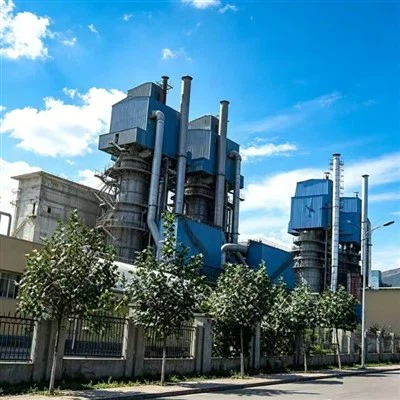
So, let’s be clear: improving calcination uniformity in annular lime kilns isn’t rocket science. It’s about being intentional with feed size, airflow, fuel distribution, bed depth, and maintenance—things that get overlooked when you’re in the thick of production. If you’re struggling with uneven lime, my advice is to stop chasing big fixes, and start checking these small, high-impact areas first.
Oxidized Pellet Plant If you’re looking for a partner to help tune your annular kiln, or need guidance on upgrades (like better feed distribution systems or customized DCS tweaks), hit us up. We work with plants of all sizes, from small independent operators to large lime producers, and we don’t do one-size-fits-all solutions—we tailor to your kiln’s specific needs. Let’s chat through your current issues and get that uniformity sorted, no fluff, no overpriced gear you don’t need.
References
- Perry, R. H., & Green, D. W. (2015). Perry’s Chemical Engineers’ Handbook (9th ed.). McGraw-Hill.
- Smith, J. M., & Ness, H. C. (2005). Introduction to Chemical Engineering Thermodynamics (7th ed.). McGraw-Hill.
- Lime Kiln Operation and Maintenance Guide. (2021). International Lime Association.
- Thermal Imaging for Industrial Process Monitoring. (2019). Industrial Thermal Solutions Journal.
- Annular Kiln Design Optimization. (2020). Journal of Industrial Heating & Processing.
Handan Metallurgical Engineering & Research Co., Ltd.
Handan Metallurgical Engineering & Research Co., Ltd. is well-known as one of the leading annular lime kiln manufacturers and suppliers in China. We warmly welcome you to buy high quality annular lime kiln made in China here from our factory. Good service and competitive price are available.
Address: Cheng’an County, Handan City, Hebei Province, China
E-mail: hanhaizhao@dzmer.com
WebSite: https://www.dzmer.com/
