If you’ve ever worked in a job that demands hand protection—whether it’s manufacturing, construction, automotive repair, agriculture, or even food processing—you’ve probably stared at a wall of glove options and wondered how to pick the right one. Two of the most common and often confused choices are cut resistant gloves and anti-vibration gloves. As a cut resistant gloves supplier who’s worked directly with factory managers, tradespeople, and small business owners for over a decade, I’ve heard this question more times than I can count: “What’s the actual difference between these two, and do I need both?” The truth is, they’re designed for completely different hazards, and mixing them up can lead to serious hand injuries or unnecessary costs. Let’s break this down clearly, based on the science of glove protection and real-world use cases. Cut Resistant Gloves
First, let’s start with what each glove is built to prevent, because that’s the core of their difference. Cut resistant gloves are engineered to stop sharp objects from slicing through the material, while anti-vibration gloves are designed to reduce the constant force of repetitive, vibrating tools that damage nerves and tissue over time. It sounds simple, but the gap between their design, testing standards, and intended use is bigger than most people realize.
To understand cut resistant gloves, you have to look at how cut resistance is measured. Global safety standards, like the European EN 388 and the American ANSI/ISEA 105, grade gloves on their ability to resist cuts from sharp edges. For example, ANSI cuts gloves into five levels (A1 to A5), with A5 being the highest—used for jobs like handling sheet metal, glass, or sharp metal blades. The material here is key: most high-level cut resistant gloves use a blend of tightly woven high-performance fibers like Kevlar, Dyneema, or stainless steel mesh. These fibers are strong enough to withstand the force of a knife or a sharp sheet of metal, creating a barrier that slows or stops the edge from penetrating the glove. The design focuses on rigidity in the palm and fingers, where cuts are most likely to happen. The tradeoff here is that these materials can be stiff, which is why many cut resistant gloves sacrifice a little flexibility to boost cut resistance. But for workers handling sharp materials, that tradeoff is worth it—one cut can lead to days off work, medical bills, or permanent nerve damage.
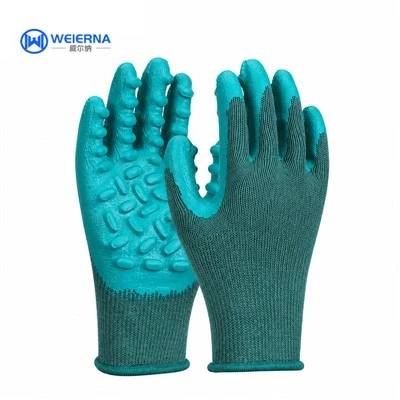
Anti-vibration gloves, on the other hand, target a different type of injury: Hand-Arm Vibration Syndrome (HAVS). HAVS is a chronic condition caused by years of using tools like jackhammers, chainsaws, angle grinders, or power drills that vibrate at high frequencies. The constant vibration compresses blood vessels and nerves in the hands, leading to symptoms like numbness, tingling, loss of grip strength, and in severe cases, inability to feel hot or cold. The standard for testing anti-vibration gloves is EN ISO 10819, which measures how much the glove reduces transmitted vibration. These gloves work differently than cut resistant ones: they have padded layers in the palm and fingers made of viscoelastic polymers, gel, or foam that absorb and dissipate vibrational energy. The design here focuses on cushioning, not rigidity—too much stiffness would make the vibration worse, so these gloves are soft and flexible. The tradeoff is that they have almost no cut resistance; that gel padding is thin and easy to puncture if you’re handling a sharp tool or material.
Let’s use two real examples to show how this plays out in the workplace. Take a metal fabricator who spends their day cutting 16-gauge steel sheets with a handheld shear. The primary hazard here is sharp metal edges that slip and slice through gloves. If this worker grabs a pair of anti-vibration gloves instead of cut resistant ones, their hands are at risk of a deep cut that could require stitches—even if the gloves feel comfortable and cushion the vibration from the shear’s motor. Now take a construction worker who operates a jackhammer for 8 hours a day. Their primary hazard is the constant vibration leading to HAVS. If they use cut resistant gloves, they might be protected from a small cut, but the stiff, rigid fibers will actually amplify the vibration, making HAVS worse over time. Worse, some workers try to cut corners and use one glove for both jobs, which leaves them vulnerable to the specific hazard they’re most exposed to that day.
Another key difference is durability and cost. Cut resistant gloves are made from high-strength fibers that hold up against abrasion and sharp edges, but the rigid materials can wear out faster in high-friction jobs. For example, a worker dragging a metal part across a workbench will wear through a cut resistant glove’s palm in a week or two. Anti-vibration gloves, with their gel padding, might hold up longer to abrasion, but the padding can tear if exposed to sharp edges, rendering the entire glove useless. That’s why as a cut resistant gloves supplier, I always tell customers that choosing the right glove depends entirely on the primary hazard of the job. If you’re in a role where cuts are the biggest risk, prioritize cut resistance. If vibration is the main threat, go with anti-vibration. If you’re in a job with both (like a carpenter who uses a chainsaw and handles sharp wood edges), you need a hybrid glove—but even those have their limits, and there’s no replacement for understanding which hazard is more dangerous.
I’ve seen too many workers make the mistake of assuming “heavier or stiffer means more protection.” Last year, a small automotive shop owner came to me because two of his line workers had cut their hands on sharp metal brackets, even though they were using what he thought were “heavy-duty” gloves. When I looked at the gloves, they were anti-vibration gloves—perfect for using power tools, but no match for the jagged edges of the metal brackets they were handling. That shop owner had confused the two types because he’d never had to think about glove standards before. We replaced his anti-vibration gloves with level A4 cut resistant gloves for the bracket handling work, and within a month, there were no more cuts. The shop owner saved money on workers’ comp premiums and avoided losing days of production.
On the flip side, I’ve also seen construction companies buy cut resistant gloves for their jackhammer operators, only to find that their workers were complaining of numbness and tingling in their hands after a few months. The cut resistant gloves’ rigid fibers didn’t absorb the jackhammer’s vibration, so instead of protecting their hands, they were worsening HAVS symptoms. That’s where education matters more than just selling a glove. As a supplier, I don’t just push the most expensive glove— I ask customers about their job tasks, the tools they use, and the hazards they face to recommend the right fit.
Let’s also clear up a common myth: some people think hybrid gloves (cut resistant plus anti-vibration) solve both problems. While these do exist, they’re a middle ground, not a perfect solution. A hybrid glove might have a cut resistant palm and a thin gel layer for vibration, but it will never perform as well as a dedicated cut resistant glove in a high-cut environment or a dedicated anti-vibration glove in a high-vibration role. The science of both protection types is specific—rigidity cuts, padding absorbs vibration—so balancing both means each function is compromised. That’s why I always advise customers to match the glove to their primary hazard, not to try and “kill two birds with one stone.”
Another point to consider is comfort and dexterity. Cut resistant gloves, especially high-level ones, can feel bulky and limit finger movement, which is a problem for jobs that require fine motor skills like wiring or assembling small parts. Anti-vibration gloves, with their soft padding, are much more flexible, which is why they’re preferred for heavy tool use. But again, that flexibility comes at the cost of cut resistance. It’s a tradeoff, and there’s no universal “best” glove—only the best glove for the job.
So, to sum up the key differences: Cut resistant gloves protect against sharp edges and cuts, use rigid high-performance fibers, are graded by standards like EN 388 and ANSI/ISEA 105, and are designed to stop slicing injuries. Anti-vibration gloves protect against chronic vibration damage (HAVS), use soft gel or foam padding, are tested by standards like EN ISO 10819, and are designed to reduce vibrational force from power tools. Using the wrong one can leave workers unprotected from their biggest hazard, leading to injuries that are costly in terms of time, money, and health.
At the end of the day, choosing the right glove isn’t just about checking a box for safety—it’s about keeping workers on the job, healthy, and productive. If you’re unsure which glove is right for your team’s tasks, don’t guess. Reach out to our team to discuss your specific needs, and we’ll help you find the protection that fits your hazards and your budget. We work with small shops and large factories alike, so no job is too big or too small for us to provide tailored advice and quality gloves that stand up to real-world use.
References:
ANSI/ISEA 105-2021, American National Standard for Personal Protective Equipment – Hand Protection
EN 388:2016, Protective gloves against mechanical risks
EN ISO 10819:2013, Protective gloves against vibration – Determination of vibration transmission
Occupational Safety and Health Administration (OSHA), Hand and Arm Protection Guidelines
International Labour Organization (ILO), Hand-Arm Vibration Syndrome Prevention
Safety Boots It is important to note that all content provided above is for illustrative purposes only and should not be construed as professional advice. For specific questions about glove selection or workplace safety, always consult a qualified safety professional.
Weierna Security Technology (Shandong) Co., Ltd.
With abundant experience, we are one of the most professional cut resistant gloves manufacturers and suppliers in China. Please feel free to wholesale bulk top-quality cut resistant gloves made in China here from our factory. We also accept customized orders.
Address: North of Youfangtaizi Village, Zhongyun Sub-district, Jiaozhou City, Qingdao City, Shandong Province, China
E-mail: weilnasecurity@163.com
WebSite: https://www.weilnasecurity.com/
