If you’ve ever stood inside a properly erected steel warehouse and thought it had room to grow—whether because your operation is picking up steam, your inventory needs more space, or your team’s outgrown the layout of your current facility—you’re not alone. For almost 12 years, I’ve worked as a steel warehouse supplier, walking job sites from small local distribution hubs to mid-sized manufacturing plants, and one of the most common questions I get is this: Can a steel warehouse be expanded? The short answer is yes, but only if you understand how steel structures are engineered, what changes you can (and can’t) make without compromising safety, and what factors will make your expansion go smoothly (or create headaches if you skip the prep work). Let’s break this down like I would with a customer who’s hovering over a set of blueprints and a spreadsheet, trying to decide if a full rebuild is better than tweaking what’s already standing. Steel Warehouse
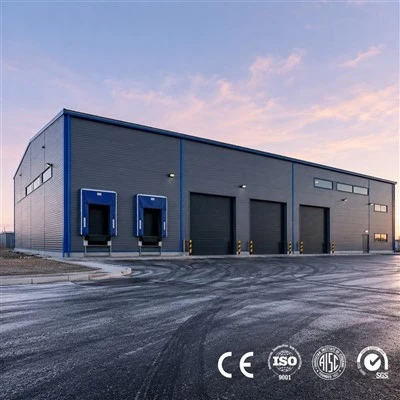
First, let’s talk about why steel warehouses are uniquely suited for expansion, compared to other building types like concrete block or wood-frame structures. Steel is modular by design—most pre-engineered steel warehouses are fabricated off-site in standard lengths, widths, and heights, so their core components (trusses, columns, roof panels, wall girts) are interchangeable, standardized, and easy to add to. Unlike a concrete warehouse, where you’d have to chip out existing foundation, rework load-bearing walls, or pour new footings mid-construction, steel buildings rely on a grid of engineered columns and beams that transfer weight to the foundation in predictable, measurable ways. That means if your existing building has a foundation sized to support additional load—something our team always checks for in the design phase—expanding is as simple as extending that column grid outward and attaching new trusses and panels to the existing structure.
But here’s the catch: not every steel warehouse is built the same. A 20,000-square-foot pre-engineered steel warehouse we built for a small retail distributor in 2018 had a foundation rated for 30% extra load, specifically because we designed it to leave room for expansion. That customer hit capacity in 2022, added 10,000 square feet to the side in three weeks, and was back up and running without closing their doors for more than a long weekend. Another client, a local auto parts supplier, tried expanding a steel warehouse they’d bought used in 2019—turns out the original manufacturer had skimped on foundation load ratings to cut costs, so adding even a single extra column meant re-pouring half the existing foundation, which doubled their timeline and tripled their budget. So step one before you even pick up a phone to talk expansion: get your original engineering documents (or a third-party structural engineer’s assessment of your existing foundation, columns, and trusses) to confirm if it can support additional load. That non-negotiable.
Next, let’s talk about the two most common types of steel warehouse expansions, because they’re not one-size-fits-all. The first is side expansion, which is what that retail distributor did: adding new bays to the side of your existing building, parallel to the existing column grid. This is the cheapest, fastest option because you’re working with a matching modular system—your existing columns are spaced 20 or 30 feet apart, so new columns will line up perfectly, new trusses will attach to the existing roof girts, and you won’t have to rework the roof. Most side expansions can be completed in 2 to 4 weeks, depending on size, and require minimal downtime if you plan the construction around off-hours or inventory moves.
The second type is end expansion, which is adding new space to the end of your warehouse, perpendicular to the existing column line. This is a little more complex because you have to tie the new foundation and columns to the existing structure, often reconfiguring the end wall of the old building to attach new wall panels and roof framing. It’s also a good bit more expensive—usually 15 to 25% more than side expansion—because you have to engineer the connection between the old and new parts to transfer wind and snow loads evenly, no gaps or weak points. A good rule of thumb: if your warehouse is less than 10 years old, end expansion is almost always feasible, as long as the original engineer accounted for end-load capacity. If it’s older than that, you’ll need a structural inspection to check for rust on column base plates or weakening of connection bolts, which can add work.
Now, what about the things you can’t change when expanding a steel warehouse? I see this mistake all the time: a customer thinks they can raise the height of their warehouse to fit taller inventory or new equipment, only to find out that the roof trusses are sized for a specific load (the weight of roof panels, insulation, snow, wind) and raising the height means longer trusses that can’t support that load without massive reinforcement. Or they want to move a load-bearing column to create a wider open space, and that’s a no-go too—columns are engineered to take specific vertical and horizontal load; moving one without re-engineering the entire structure is a safety hazard, not to mention a code violation. The biggest red flag here is “making do” with mismatched parts: don’t buy a used steel truss from a 1990s building to add to your 2020 warehouse, because the load rating will be wrong, and the bolt holes won’t line up properly. We always recommend using the same manufacturer’s components for expansions, or a custom-engineered set that matches your existing building’s specs—even if it adds a little cost upfront, it saves you from having to tear the whole thing down a few years later.
Another often-overlooked factor is site prep for expansion. You can have the perfect set of blueprints for a new bay, but if your property line is 10 feet away from your existing warehouse, or there’s a 12-foot drop in the ground where you want to build, or local zoning laws require 20-foot setbacks from property lines, your expansion will stall before it starts. I had a client a couple years ago who planned a 15,000-square-foot side expansion, only to find out the county had updated zoning rules that required 15-foot setbacks instead of the 10-foot setback they’d built under in 2015. They had to shift the entire warehouse back 5 feet and adjust the column grid, which added a month to the timeline and $8,000 to the cost. That’s why we always tell customers to check local zoning, property surveys, and utility lines (sewer, electric, gas lines running under the proposed expansion site) before finalizing any expansion plans. Nothing kills a project faster than digging up a 4-inch gas line mid-construction.
Now, let’s talk about the real-world cost and timeline, because that’s what matters most to anyone trying to make this decision. On average, a side expansion for a steel warehouse runs between $15 and $20 per square foot, compared to $25 to $35 per square foot for a brand new warehouse. An end expansion is $20 to $28 per square foot, still cheaper than new construction. Timelines are equally favorable: a 10,000-square-foot side expansion takes 2 to 4 weeks, as I mentioned earlier, while a same-sized new warehouse takes 10 to 12 weeks. That’s a huge difference for businesses that can’t afford to be closed for months, especially ones that deal with perishable inventory or time-sensitive orders.
But wait—what if you have an older, uninsulated steel warehouse, and you want to expand but also upgrade the insulation and energy efficiency at the same time? That’s totally doable, and in fact, it’s a smart move. When we expand a warehouse, we can add spray foam insulation to the new parts, then connect it to the old parts, and upgrade the HVAC system to handle the extra square footage, all without replacing the entire building. A customer in Portland did that a couple years ago: they expanded their 20,000-square-foot warehouse by 10,000 square feet, added spray foam to the new bays, and replaced their old 10-ton HVAC unit with a 15-ton unit that served both old and new space. Their energy bills dropped 22% after the upgrade, which more than covered the cost of the HVAC add-on.
The biggest myth I hear, though, is that expanding a steel warehouse is only good for small, incremental additions. I recently worked with a large food manufacturing client who expanded their 50,000-square-foot warehouse by 30,000 square feet—three full bays—over a long holiday weekend. They planned the expansion to coincide with their annual Christmas shutdown, so construction crews worked around the clock for four days, and when they opened back up, the entire space was connected, with matching flooring, lighting, and loading docks. They didn’t have to move any of their inventory more than necessary, and they saved $120,000 compared to building a new, separate warehouse of the same size. That’s the power of steel’s modular design: you can scale up in chunks, or add a full third of your building at once, as long as you plan it right.
So when does expanding make sense, versus building new? Let’s run through a quick checklist. If your existing foundation is rated for extra load, you have enough property space to expand without zoning or setback issues, and your existing structure is less than 20 years old, expansion is almost always the right call. If your foundation is already at max load, you’re within 5 years of outgrowing your current space, or local zoning won’t let you build out, then new construction might be better. The key is getting a structural assessment from a trusted third party early on—don’t rely on the original manufacturer’s word if you don’t have the original engineering documents. We’ve had customers come to us after buying a used steel warehouse that had been modified without any engineering, and we had to tell them expansion wasn’t feasible without a full rebuild, which is way more expensive than starting fresh.
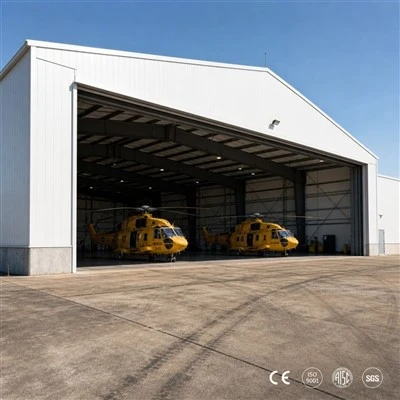
At the end of the day, the question “Can a steel warehouse be expanded?” breaks down to three core things: the engineering of your existing structure, the layout of your property, and how well you plan for the connection between old and new parts. Steel’s modular, standardized design makes it uniquely flexible for expansion, way more than any other common warehouse building material, but it’s not a “plug and play” project that you can tackle without professional input. The worst thing you can do is assume your building can handle more space without checking, or cut corners on matching components, which can lead to safety issues, code violations, or costly repairs down the line.
Steel Workshop Buildings If you’re a warehouse owner who’s outgrown your space, or just curious about what your options are, let’s connect. I’ve spent the last decade helping clients evaluate their structures, run load assessments, and plan expansions that fit their budget and timeline, no matter how big or small the project is. We can schedule a time to walk your site, review your existing plans (or do a quick structural check if you don’t have them), and give you a clear picture of what expansion would look like for you—no sales pitch, no fine print, just honest answers to your questions.
References
- American Institute of Steel Construction. (2021). Pre-Engineered Steel Warehouse Design and Expansion Guidelines. AISC Press.
- Steel Building Manufacturers Association. (2022). Load Capacity Assessment for Existing Steel Structural Systems. SBMA Technical Bulletin Series.
- National Association of Home Builders. (2020). Commercial Steel Structure Expansion Best Practices. NAHB Research Center.
- International Code Council. (2021). International Building Code: Structural Load Requirements for Modular Commercial Additions. ICC Publishing.
- Portland State University School of Architecture. (2023). Energy Efficiency Upgrades for Existing Steel Warehouses. PSU Construction Science Report.
Liaoning Zhongbei Steel Structure Engineering Co., Ltd.
Liaoning Zhongbei Steel Structure Engineering Co., Ltd. is one of the most professional steel warehouse manufacturers and suppliers in China, also supports customized service. We warmly welcome you to buy advanced steel warehouse made in China here from our factory. Also, quotation is available.
Address: No. 239 – 1, Shenbei West Road, Yuhong District, Shenyang, Liaoning.
E-mail: Info@cnssgroup.cn
WebSite: https://www.cnssprefabbuildings.com/
