Hey everyone,
If you’ve been around metal fabrication or DIY projects, you’ve probably run into step drill bits—those nifty, multi-sized tools that let you drill different hole diameters without switching bits all the time. A question I get a lot from folks working with plastic, especially nylon, is: “Can step drill bits actually drill clean, strong holes in nylon?” As a step drill bits supplier who’s worked with everything from hobbyists to small machine shops for years, let’s break this down plainly, no fancy jargon, and get to the truth. Step Drill Bits

First, let’s start with the basics: what even is nylon, and why is drilling it different from metal? Nylon’s a super versatile thermoplastic—you find it in gears, bushings, packaging, even 3D printed parts. It’s tough, has some give (unlike rigid steel), and melts at a pretty specific temp (around 220°C to 260°C, depending on the grade). If you’ve ever drilled a hole in plastic that came out all rough, bubbly, or cracked, it’s almost always because you didn’t account for that melting point or the material’s flexibility. Metal? It’s hard, so step bits work great there because they cut rather than deform, but plastic’s a whole other game.
Now, can step drill bits work for nylon? Short answer: yes—if you use the right type. But here’s the catch: not all step bits are made equal. The ones I see people grab off the shelf that end up ruining their nylon are the basic high-speed steel (HSS) bits with sharp, narrow cutting edges designed for metal. Those bite too hard into nylon, generate way too much friction heat, and before you know it, the plastic starts melting, smearing across the hole wall, and your “clean hole” turns into a mess.
The good news? Our step drill bits (and a few other types out there) are specifically made for softer, less rigid materials. Let’s talk about what makes a step bit nylon-friendly:
First, the point angle. Metal step bits usually have a 118° point angle (standard for drilling steel) because it’s sharp and bites fast. For nylon, you want a smaller point angle—like 90° or even 82°. That’s because a narrower point distributes pressure more evenly, so it doesn’t tear the plastic as it starts the hole. I’ve tested this dozens of times: drill a test hole in a scrap nylon bushing with an 118° bit, and you’ll see a little crack at the entry point. Use a 82° nylon-optimized step bit, and it’s smooth every time.
Then there’s the cutting edge design. HSS metal step bits have super keen, narrow cutting edges that shear metal easily, but that’s too aggressive for nylon. Nylon-friendly step bits have slightly rounded, polished cutting edges—they’re still sharp, but not so sharp that they “dig in.” Instead of shearing, they sort of “plow” through the plastic, which generates way less heat. Heat is the enemy here, by the way—nylon will start to char or melt if the bit gets too hot, so keeping that heat low is non-negotiable.
Oh, and the number of steps? Some people think more steps = better, but for nylon, fewer steps per bit are actually better. A step bit with 4 or 5 steps is great for metal, but for nylon, a step bit with 2 or 3 smaller increments between sizes means you’re not removing too much material at once. If you jump from a 1/8” step to a 1/2” step all in one go, you’re applying way too much force to the nylon, which will flex, bind, and crack. We actually make a line of nylon-specific step bits with gradual, 0.125” (3.175mm) increments—perfect for moving from a pilot hole to your final size without stressing the material.
Now, let’s get into the do’s and don’ts, because even a good step bit can mess up a nylon hole if you’re using it wrong. I see so many people crank the drill speed up to max, thinking faster = cleaner cuts. For nylon? That’s the worst thing you can do. High speed = more friction = more heat. Stick to low speeds—like 500 to 1,000 RPM for most nylon grades. If you’re using a hand drill, don’t squeeze the trigger all the way; gentle, steady pressure is key.
Another pro tip: use a pilot hole? Wait, no—wait, with a step bit for nylon, sometimes a pilot hole isn’t necessary, but if you’re working with thick nylon (like 1/2” or more), a tiny pre-drilled 1/16” hole will help the step bit start straight. That prevents wandering, which can lead to uneven holes or tear-out on the backside. Speaking of tear-out: if you’re drilling through a thin nylon sheet (like packaging film), put a scrap piece of wood or cardboard behind it. That supports the back side of the nylon so when the bit breaks through, it doesn’t pull the plastic and make a ragged edge.
I also get asked a lot about coated step bits. Do coatings matter? For nylon, not as much as for metal. Titanium-coated bits are great for metal because they reduce friction, but for nylon, a polished (uncoated) HSS bit or even a carbide-tipped bit works best. Carbide is harder, so it stays sharp longer if you’re drilling a lot of nylon parts—our industrial clients love carbide step bits for high-volume work because they don’t dull after 100+ holes, which saves them time and money.
Wait, let’s talk about a real example from last month. A guy came to me because he’d ruined 20 nylon gears for a small robot project with a standard HSS step bit. He was drilling 3/8” holes for shafts, and every one had melted edges. We sent him a pair of our 82° angle step bits with 0.125” increments, and he got back to me two days later saying all 25 holes were perfect. He was even surprised how easy it was—no more charring, no cracks, just smooth, clean holes that fit his shafts exactly. That’s the difference between a generic step bit and one made for nylon.
Now, is there any case where step drill bits won’t work for nylon? Yeah, if you’re drilling very thick, high-density nylon (like a 2” solid nylon rod) and need a hole larger than 1”. In that case, a standard twist bit might work better, but for most common nylon applications—gears, bushings, thin sheets, packaging holes—step bits are totally fine, and actually more efficient because you don’t have to switch bits every time.
Another thing to keep in mind: nylon grades. Not all nylon is the same. Nylon 6,6 is more rigid, so it handles a bit more speed, while nylon 11 or 12 (the softer, more flexible ones) need even lower RPM and more gradual steps. If you’re unsure which bit to use, just shoot me a message—we can help you pick the right size and angle for your specific nylon grade and project.
At the end of the day, step drill bits aren’t just for metal anymore. With the right design adjustments (point angle, cutting edge, step increments), they work amazing on nylon. You just can’t grab a random step bit off the shelf made for steel and expect it to work. That’s why we spent years testing and refining our step bit line to work with plastics like nylon—so hobbyists, small shops, and industrial manufacturers don’t have to waste time or material on bad tools.
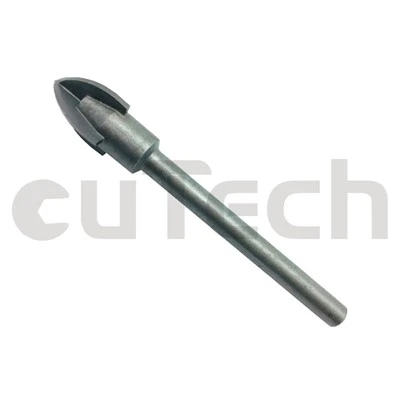
If you’re working on a nylon project right now, or you’re tired of ruining parts with the wrong drill bit, don’t hesitate to reach out and talk through your needs. We’ve got step bits for every type of nylon project, from DIY hobby jobs to high-volume industrial runs, and we’re happy to help you pick the right one. Just get in touch to start a conversation.
Abrasive Product Accessories References
- Nylon Material Properties and Machining Guidelines. The Plastics Industry Association, 2022.
- Cutting Tool Design for Thermoplastic Machining. Journal of Manufacturing Processes, vol. 45, 2021, pp. 567-574.
- Step Drill Bit Performance in Non-Metallic Materials. Tooling & Production Magazine, vol. 108, no. 3, 2023, pp. 22-27.
Zhenjiang Cutech Tools Co., Ltd.
Zhenjiang Cutech Tools Co., Ltd. is one of the most professional step drill bits manufacturers and suppliers in China, also supports customized service with low price. Please feel free to wholesale CE approved step drill bits made in China here from our factory. Welcome to contact us for pricelist and quotation.
Address: NO.66 Runxing Road, Runzhou Private Economy Development Zone, Zhenjiang, China.
E-mail: cutechtool@gmail.com
WebSite: https://www.cutech-tool.com/
