If you’ve ever worked with metal machined components, you know how satisfying it is to turn a raw block into a precision part that fits exactly where it needs to. But when we’re talking about thin-walled parts—say, those 0.5mm to 2mm thick shells for aerospace brackets, medical device housings, or even consumer electronics frames—things get tricky fast. I’ve been in this metal machined components game for over 12 years now, and I can count on one hand how many times a client’s first thin-wall part order didn’t come with a “just let us know if it’s possible” note. Spoiler: it’s always possible, but it comes with a whole set of challenges that even seasoned machinists run into more often than you’d think. Metal Machined Components

Let’s start with the obvious one: deflection. If you’ve ever held a thin piece of aluminum or stainless steel, you know it bends way easier than a solid block. When we’re machining, the cutting tool is pushing and pulling on the part at thousands of rotations per minute, and that force doesn’t care if the material is thick or thin. If the wall is only 1mm thick, that 20kg of force from the end mill isn’t just cutting—it’s shoving the wall out of shape before we even finish the pass. I remember a client last year who needed a set of titanium fuel system brackets for a small drone. Their initial design clamped the part at the edges, and when we ran the first test cut, the walls bowed out 0.3mm. That might sound small, but for aerospace, that’s 30 times the acceptable tolerance. We had to rework the fixturing to clamp the part at internal features instead, and even then, we had to dial back the feed rate so the tool wasn’t digging in too hard.
Tooling wear is another head-scratcher here. Thin-walled parts usually use materials that are tough for a reason—they need to be light but strong, so we’re working with things like 6061-T6 aluminum, 304 stainless, or Inconel. The problem is, when the wall is thin, we can’t use a super aggressive tool path to speed up the job. If we crank up the cutting speed, the tool dulls way faster than it would on a thick part. A dull tool doesn’t cut—it scrapes, and that scraping generates way more heat. Heat is the enemy here, too. When the metal gets hot, it expands. A thin wall might expand by a few microns, which is enough to throw off the dimensional accuracy of the part. On top of that, the heat can make the tool wear unevenly, so you get a lopsided edge on the wall. We had a medical device client a few months back who needed a set of 1mm-thick stainless steel covers for implantable sensors. Their parts require a mirror-smooth finish, so we couldn’t just rough-cut with a cheap tool. We ended up using a coated carbide end mill with a special polished edge, even though it cost us 20% more per tool. But the alternative was scrapping 1 in every 5 parts, which would’ve cost them way more in the long run.
Fixturing is where most small shops cut corners, and that’s exactly where thin-wall parts get messed up. You can’t just clamp a thin piece in a vice like you would a solid block. If you clamp too tight, you crush the wall. If you clamp too loose, the part moves during machining. We’ve tried every trick in the book here: custom vacuum chucks that suck the part flat, soft jaws that match the shape of the part’s internal features, even low-temperature fixturing where we use a small amount of cryogen to hold the part without clamping it at all. But cryo-fixturing isn’t cheap, and not every shop has the equipment. I’ve seen a competitor mess up an order for 500 thin-wall aluminum smartphone frames because they used standard soft jaws. The jaws compressed the wall on one side, so every part was out of spec by 0.2mm. We ended up reworking half of them, and the client switched to us after that.
Then there’s the problem of chatter. Chatter is that annoying vibration you get when the tool and the part aren’t in sync. On a thick part, the rigidity of the material usually stops chatter before it becomes a big deal. But on a thin wall, there’s not enough rigidity, so the vibration ripples through the wall. That leaves wavy edges on the part, or even tiny cracks in the metal. I once had a job for a customer who needed thin-wall brass connectors for audio equipment. Their first batch had a terrible chatter pattern—you could see it with the naked eye, and it sounded like a low hum when the tool was running. We fixed it by adding a small support tool called a “steady rest” that pressed against the opposite side of the wall while we cut, which stopped the vibration. The downside was it added 15 minutes to each part’s cycle time, but the client was happy because the parts worked perfectly for their audio devices.
Dimensional accuracy is non-negotiable with thin-walled parts, and it’s way harder to hold than with thick ones. Let’s say you’re machining a part with a wall thickness of 1mm, and your tolerance is ±0.05mm. That means the wall has to be within 0.05mm of the exact size you need. But if the part deflects 0.03mm during machining, and then springs back to its original shape after you take it out of the clamp, that leaves you with a wall that’s 0.02mm under the minimum. We use a coordinate measuring machine (CMM) to check every part for thin-wall jobs, and even then, we catch surprises sometimes. Last quarter, we had an order for thin-wall aluminum heat sinks for electric vehicle batteries. The parts were designed to have a uniform wall thickness, but because of the heat during machining, the material expanded more in some areas than others. We had to adjust our cutting path to reduce heat in the thinnest sections, and we ended up scrapping 8 parts before we got the process right.
Material selection also plays a big role here. Some metals are way harder to machine into thin walls than others. For example, magnesium is super light, but it’s soft and prone to deflection. Inconel is super strong, but it generates a lot of heat, which expands the thin wall. We had a client who tried to machine thin-wall Inconel parts in their own shop before they came to us. They had a 30% scrap rate because the walls were cracking after machining. In our shop, we pre-heat the part a little before machining to reduce the temperature difference between the tool and the part, which cuts down on cracking. It’s a small step, but it makes a huge difference.
Wait, let’s talk about post-machining processes too. You can’t just machine a thin wall and call it done. Sometimes you have to deburr the edges, or grind a surface smooth. But when the wall is thin, deburring with a rotary tool can grind away too much material, making the wall even thinner. We use abrasive brushes instead of sharp tools for deburring thin parts, because they’re gentler. And for grinding, we use a slow-speed grinder with a fine grit, so we don’t add unnecessary stress to the part.
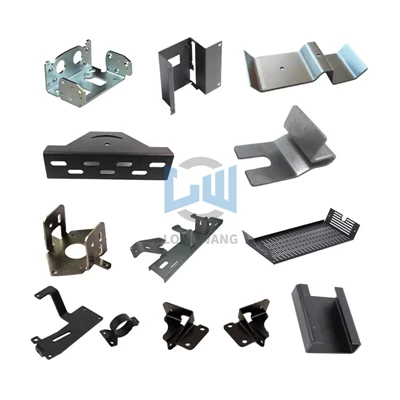
I know this sounds like a lot of work, but that’s why clients come to us. Not every metal machined components shop knows how to handle thin-wall parts. We’ve invested in the right tools, the right fixturing, and the right processes over the years, so we can take on jobs that other shops turn down. If you’re working on a project that needs thin-wall metal components, don’t assume it’s impossible. Just send us your design, and we’ll walk you through what we can do, how we do it, and make sure you get parts that fit exactly what you need. We’re here to help you work through the challenges, not just quote a price.
Industrial Ancillary Metal Parts References
- Gillespie, L. K. (1999). Machine Deflection in Milling Thin-Walled Parts. Journal of Manufacturing Science and Engineering, 121(2), 245-251.
- Davim, J. P. (2011). Machining of Thin-Walled Components. Springer.
- Wang, Z. Y., et al. (2018). Tool Wear and Surface Integrity in High-Speed Machining of Thin-Walled Titanium Alloys. International Journal of Machine Tools and Manufacture, 132, 45-56.
- Smith, G. T. (2020). Fixturing Strategies for Thin-Walled Machining. Proceedings of the International Conference on Manufacturing Research, 112-117.
Changzhou Detong Metal Products Co., Ltd.
As one of the most professional metal machined components manufacturers and suppliers in China, we also support customized service. Welcome to wholesale bulk high quality metal machined components in stock here from our factory. If you have any enquiry about cooperation, please feel free to email us.
Address: No.2 Xinsheng Road, Henglin Town, Wujin District, Changzhou City, Jiangsu Province
E-mail: detong18@outlook.com
WebSite: https://www.cn-detong.com/
