Hey there, let’s cut through the jargon for a sec—no stuffy engineering lectures here, just the real deal on how high-voltage circuit breakers actually work, straight from someone who sells ’em every single day. I’m not some textbook robot; I’ve got grease under my nails from testing these things at our warehouse, and I’ve fielded a hundred panicked calls from grid operators who needed one of these bad boys to not fail when the lights go out (for a good reason, not because of a mistake). High-voltage Circuit Breaker
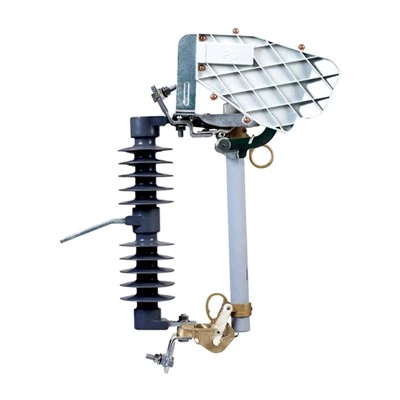
First off, let’s get one thing straight: a high-voltage circuit breaker isn’t your house’s little breaker that flips when you plug in too many Christmas lights. Those ones trip to protect your TV from a short; these bad boys are made for lines that carry 10kV, 110kV, even 500kV (that’s enough juice to power a small city for a neighborhood) and they’re supposed to do two non-negotiable things: 1) Turn the power on reliably, and 2) Kill a fault dead faster than you can blink when something goes wrong. Like, a lightning strike hits a substation, or a tree falls on a line. If that fault sticks around, you’re looking at a fire, a transformer blowing up (those cost millions), and hours of blackouts. We’ve had utilities call us at 2 a.m. because their old breaker pooped out during a storm—so trust me, this stuff matters.
Let’s break it down like I’m explaining it to my cousin who works on construction and thinks electricity is magic. At the core, every high-voltage breaker has two main parts: the contacts (think of them as the switch blades) and an arc suppression system (the hero no one sees). When the breaker is “closed,” those contacts are pressed tight together—electricity flows through ’em like water through a hose. When it’s “open,” they’re ripped apart, right? But here’s the catch: when you yank two metal contacts apart while high-voltage electricity is flowing, you don’t just get a gap. You get an arc—superheated, blindingly bright, thousands of degrees, a plasma flash that acts like a live wire all on its own. That arc would keep carrying power, defeating the whole purpose of breaking the circuit. So the arc suppression system’s whole job is to kill that arc in microseconds.
Now, how do different breaker types do that? Let’s start with the most common ones I sell because they’re workhorses for substations and transmission lines: vacuum circuit breakers and SF6 (sulfur hexafluoride) ones. Yeah, SF6 sounds like a sci-fi gas, but it’s been the go-to for decades because it’s crazy good at putting out arcs. Here’s how an SF6 breaker works, step by step, no fancy words: When a fault is detected (we’ll get to the detection part in a sec), the actuator (that’s the trigger, like a big spring or hydraulic piston) slams the moving contact away from the stationary one. As soon as the gap opens, a blast of high-pressure SF6 gas blows right through that tiny space. The gas cools the arc, pushes the plasma away, and replaces it with non-conductive gas faster than the arc can restrike. Vacuum breakers are simpler—they do the same thing, but the contacts are inside a sealed vacuum bottle. No gas, no air, just empty space, so there’s nothing to carry the arc once the contacts separate. Super reliable for medium-high voltage, too.
Wait, how does the breaker know there’s a fault, anyway? That’s where the control and sensing side comes in, and I can tell you from experience this is the part that skips out if you skip maintenance. We install current transformers and voltage sensors all along the line that feeds into the breaker. If those sensors spot a current spiking way higher than it should (like from a short circuit) or a voltage drop (like a line snapping), they send a signal to the breaker’s control unit. That unit doesn’t just flip a switch—it triggers that actuator I mentioned, usually in like 20 milliseconds. For context, a human blinks in 100-400 milliseconds. So the breaker’s already done its job before most people even register there’s a problem.
Let’s run through a real scenario to make this concrete. Last spring, we got a call from a utility in Ohio—big storm, tornado hit a transmission corridor that feeds a city of 50k. Their old SF6 breaker, which had been in service for 18 years, failed to trip when a pole fell, because the arc chamber had developed a tiny leak of SF6 over time. The gas pressure dropped, so when the contacts separated, there wasn’t enough blast to kill the arc. The fault fed back to the substation’s main transformer, and they were staring at a $2M repair bill plus 12 hours of blackouts. We sent a 145kV SF6 replacement breaker out on a flatbed by noon, our techs got it installed and tested by 8 p.m., and the next time a tree fell on that line, it tripped clean as a whistle. That’s the difference between a good breaker and a dud. You can’t skimp on this stuff.
Now, let’s get into the details that make these breakers tick, because there’s more to it than just slamming contacts apart. First, contact material. You can’t use just copper—when those contacts are slammed together thousands of times over 20 years, they’d weld themselves shut or wear down. We use contact materials that are a mix of copper and tungsten, or silver and cadmium (though we use lead-free stuff these days, environmental rules!) that handle high heat, resist welding, and stay consistent. That’s why our breakers have a 20-year service life minimum—we test every contact batch for wear resistance.
Then there’s the actuator. I mentioned springs or hydraulics, but some newer ones use electric actuators, which are easier to maintain. Here’s a common mistake I see: utilities skip annual actuator testing because it’s “too much work.” But if a spring rusts or a hydraulic line has a leak, the actuator won’t move the contacts fast enough. Last year, a power company in Texas had a breaker that took 200ms to trip instead of 20—by that time, the arc had already burned through the line, causing a 3-hour blackout. Oops. That’s why we offer annual maintenance checkups, too—we don’t just sell breakers, we back ’em up.
Wait, what about high-voltage breakers vs. medium ones? The math changes here. At low voltage (like your house’s breaker), the gap between contacts is tiny—millimeters. At 500kV, that gap can be over a meter, because you need enough space to insulate against that kind of voltage. If you don’t have the right gap, the voltage will jump the gap like static, and the arc lives on. That’s why those big transmission breakers are huge—you can’t fit a 1-meter gap in a tiny box. Vacuum breakers actually work for up to 100kV, but above that, SF6 is still king because the gas has higher dielectric strength (meaning it can block more voltage) than air or vacuum at that scale.
Let’s also bust a myth: a lot of people think circuit breakers and fuses are the same. Nah. A fuse is a one-and-done device—when it blows, you have to replace it. A circuit breaker? It trips, then you can flip it back on (once the fault is fixed, obviously) and it works like new. That’s why they’re used in grids—you can’t be replacing a million fuses during a storm.
Now, let’s talk about the stuff that makes us different from other suppliers, because at the end of the day, this isn’t just a how-to—it’s why our breakers matter. We don’t cut corners on arc chamber design. I’ve seen cheap breakers where the arc is just vented straight into the air, which is not only bad for the environment (SF6 is a potent greenhouse gas—we use recovery systems to capture 99% of it when we service our breakers) but also dangerous for nearby workers. Our breakers have enclosed arc chambers that contain the blast, so no flying debris or toxic gas leaks. We also test every single breaker before it leaves our warehouse—we run thousands of tripping cycles, simulate lightning strikes, check for pressure drops, and make sure the control unit signals work every time. No “tested in lab” garbage—tested on real breakers, real conditions.
What about maintenance? I get it, utilities are stretched thin, crews are busy fixing lines after storms, so they don’t want to mess with a breaker’s internals every year. Our breakers are designed for minimal upkeep. The SF6 chambers are sealed for 15 years, so you don’t have to check gas pressure every month. The contacts are self-lubricating, so no need to oil them. We even include a remote monitoring module in most of our high-voltage breakers now—you can track gas pressure, tripping cycles, and actuator health from your control room. No more climbing up a pole at 3 a.m. to check a breaker that’s fine.
Let’s wrap this up with the big picture. High-voltage circuit breakers are the unsung heroes of the power grid. They’re the reason your lights stay on when a tree falls, why substations don’t burn down when lightning hits, why neighborhoods don’t lose power for hours. They’re deceptively simple in concept—open a gap, kill the arc—but crazy complex in execution. Every part, from the contact material to the arc chamber design to the actuator, has to work in perfect sync, because if it doesn’t, the consequences are huge.
If you’re a grid operator, a substation manager, or anyone who needs a reliable high-voltage circuit breaker that won’t let you down when the pressure’s on, hit us up. We’ve got breakers for every voltage level, from 10kV distribution lines up to 550kV transmission lines, and our team can help you pick the right one for your needs, not just the cheapest one. We also offer maintenance and emergency replacement, so you’re not stuck with a broken breaker waiting days for parts. When the storm hits, you need a breaker that works, and that’s what we deliver.
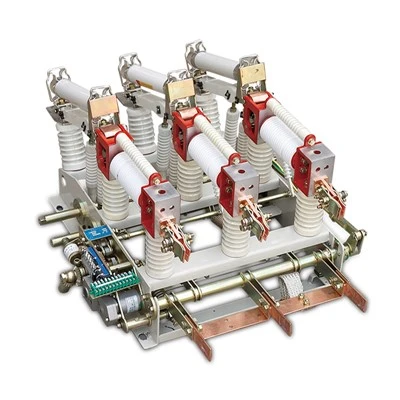
Ready to chat about your project, or need a quote for a replacement? Reach out whenever—we’re here for you, 24/7 when it matters most.
High and Low Voltage Switchgear References:
High Voltage Circuit Breakers: Theory and Practice, Siemens Energy, 2021
Electric Power Substation Equipment Maintenance Guidelines, IEEE Std C37.101-2020
Sulfur Hexafluoride (SF6) Gas Management for High-Voltage Equipment, Environmental Protection Agency, 2022
Vacuum Interrupter Technology for Medium and High Voltage Applications, ABB Power Grids, 2019
Zhongtai Electric Power Technology Co., Ltd.
With abundant experience, we are one of the most professional high-voltage circuit breaker manufacturers and suppliers in China. We warmly welcome you to wholesale bulk customized high-voltage circuit breaker from our factory. If you have any enquiry about quotation, please feel free to email us.
Address: High-tech Industrial Park, Chongren County, Fuzhou City, Jiangxi Province (No. 261 Yingbin Avenue)
E-mail: info@zhongtaielectric.com
WebSite: https://www.zhongtaipower.com/
